
Table Of Content
- Why a Pinterest Moodboard to Reality Translation Can Feel So Different
- Turn Your Pinterest Moodboard to Reality Before You Fill the Cart
- Use AI Styling to See the Aesthetic on You
- Three Viral Aesthetics That Travel Better Than the Original Pin
- Clean Girl: Let Your Colouring Lead
- Quiet Luxury, Minus the Heavy European Layers
- Y2K and Tokyo Streetwear: Keep One Proportion Loud
- Shop Less, Test More
- Frequently Asked Questions
- Can AI tell me whether clothes will fit?
- How many Pinterest images should I use to identify my style?
- Do I need to copy a viral aesthetic exactly?
- What should I test before buying a statement piece?
- Can visualisation help me shop more mindfully?
Saving a look is easy. Wearing it on a Tuesday, in your climate, with your budget and your actual wardrobe? That is where the Pinterest moodboard to reality gap shows up.
Your “Style Inspo” board might jump from Copenhagen minimalism to Parisian quiet luxury to neon Tokyo streetwear, while your daily uniform remains jeans, a tee and the same reliable overshirt. That is not a personal-style failure. Pinterest images are styled for a particular person, setting and camera lens—not necessarily for your life.
The smarter move is not buying every saved look. It is testing an aesthetics visual language on yourself first. That is where AI Fashion Styling can be useful: platforms such as Fashually offer a low-stakes way to explore an outfit, hair direction, colour palette or editorial mood before spending money or making space in your wardrobe.
Why a Pinterest Moodboard to Reality Translation Can Feel So Different
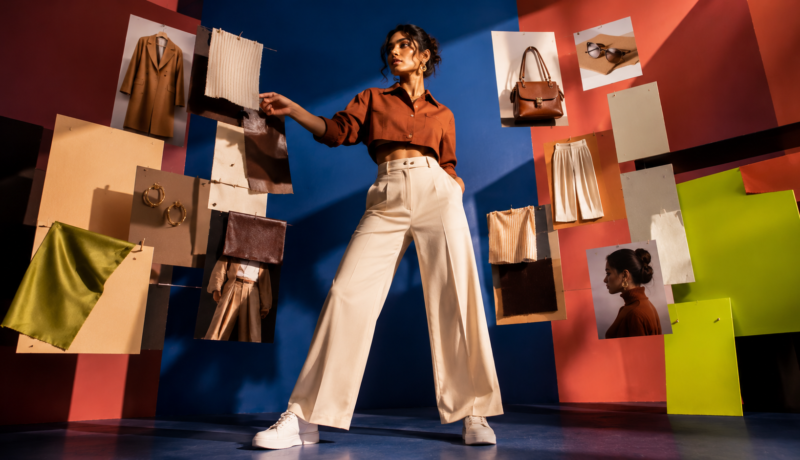
Pinterest fashion inspiration is designed to create an instant feeling. It does not always tell you whether cool taupe will flatter your complexion, whether a cropped boxy jacket suits the proportions you prefer, or whether a cable-knit sweater is realistic for Hyderabad in April.
- Colour: Beige, optic white and cool grey can read very differently across warm, olive and deep skin tones.
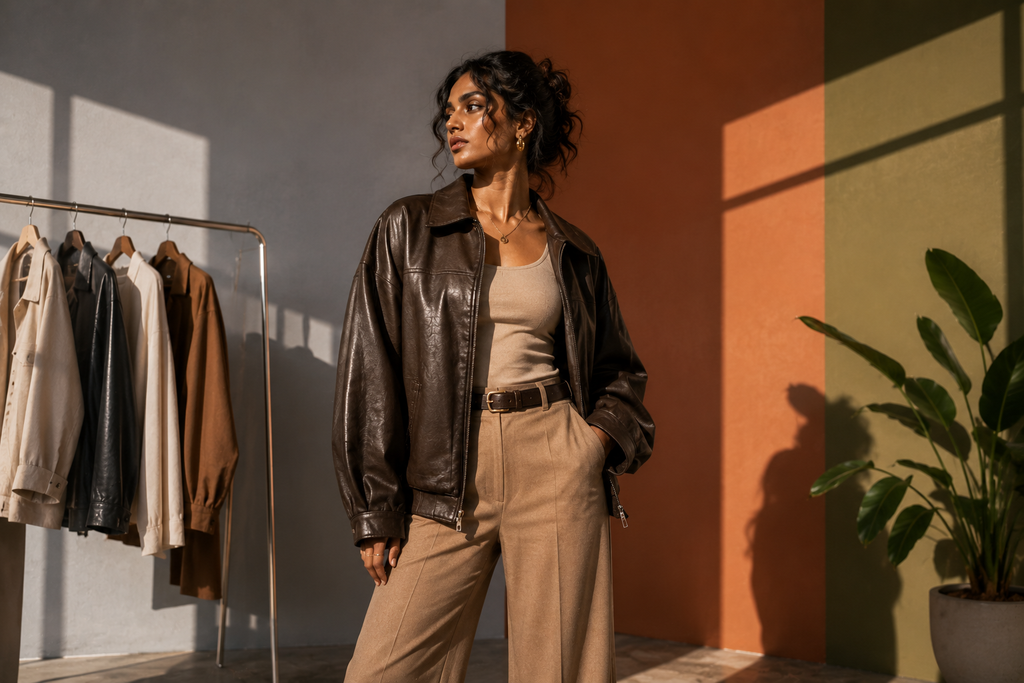
- Fit and proportion: An oversized leather jacket may look deliberate on one person and overpowering on another because of length, shoulders and styling balance—not arbitrary body-type rules.
- Hair and beauty: Slicked-back hair and “no-makeup” makeup ask different things of thick, wavy, curly or humidity-prone hair.
- Context: A quiet-luxury look outside a Milan café lands differently on a weekday commute in Mumbai.
- Climate and budget: Heavy wool, imported sneakers and designer tailoring are not prerequisites for looking well styled.
An aesthetic is not a uniform. It is a set of signals—silhouette, texture, colour, accessories and mood—that can be translated for your own life.
Turn Your Pinterest Moodboard to Reality Before You Fill the Cart
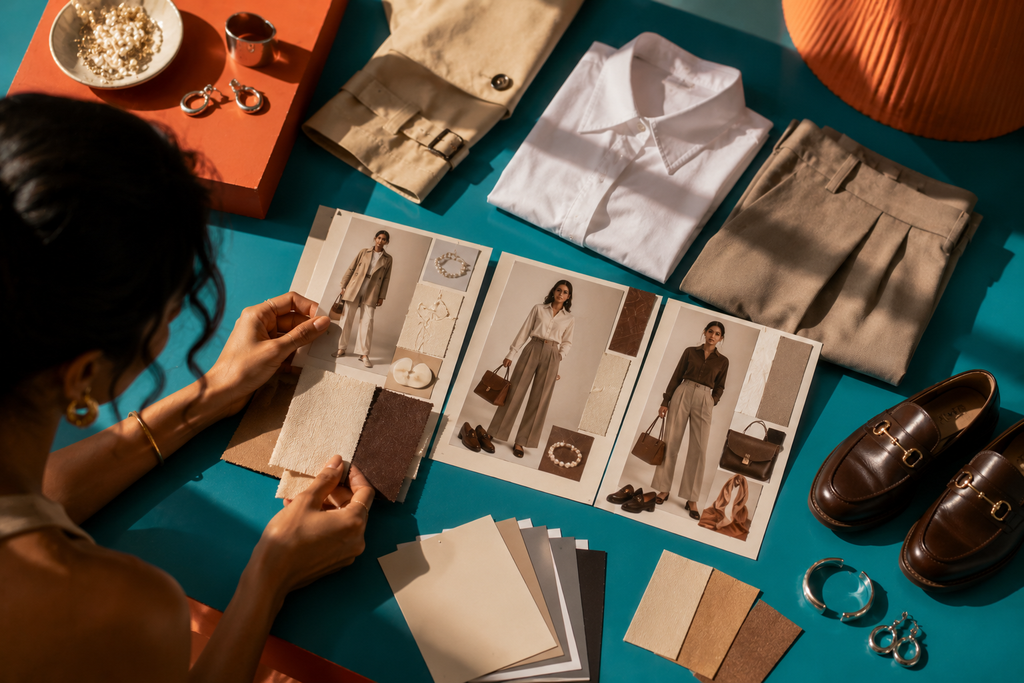
Before searching for product links, decode your board. Look through 20 to 30 saved images and note what repeats. Your “Old Money” board may really be about crisp shirts, pleated trousers, brown leather and pearl jewellery—not a country estate. Your Tokyo streetwear pins may be driven more by contrast, cargos and silver hardware than by head-to-toe black.
- Extract the style code. Identify repeated colours, shapes, fabrics and accessories.
- Separate essentials from editorial extras. A beige trench may matter; the Parisian backdrop does not.
- Build three outfit formulas. Try white shirt + tailored trousers + loafers, or cargos + fitted tee + oversized jacket.
- Adapt for comfort and climate. Replace cashmere with cotton or linen, and heavy layers with breathable overshirts.
- Visualise before buying. Compare warm camel with cool taupe, or straight-leg trousers with wide-leg versions.
This approach helps you find your personal style without turning every viral look into a complete personality transplant.
Use AI Styling to See the Aesthetic on You
An AI-powered virtual outfit try-on works best as a comparison tool, not a shopping machine. Fashually’s fashion visualisation and AI Virtual Try-On workflows can help you explore how aesthetic directions may look with your facial features, colouring and proportions, along with the lighting and setting that make a moodboard feel cohesive.
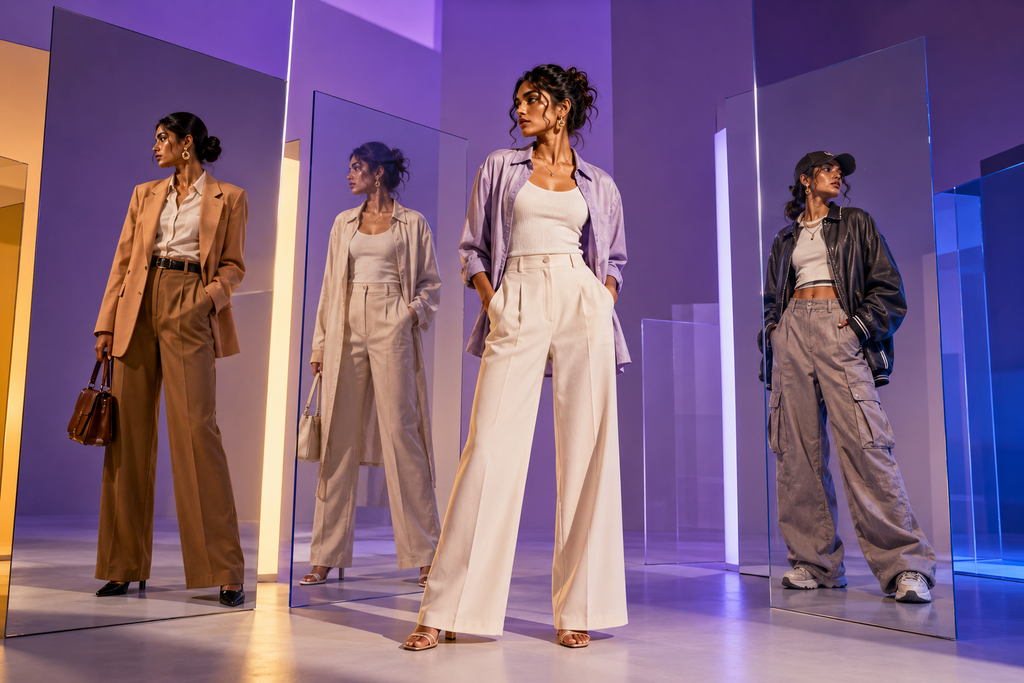
- Upload a clear, well-lit photo with your face visible.
- Choose one aesthetic direction rather than combining five trends at once.
- Generate variations: warm camel versus cool beige, a slick bun versus soft natural texture, fitted trousers versus a relaxed silhouette.
- Compare what feels like you, not simply what resembles the original pin most closely.
- Create a shortlist of pieces worth trying on, borrowing or recreating from your closet.
Think of it as personal-style visualisation, not a promise of perfection. AI-generated fashion images cannot confirm sizing, fabric weight, quality, comfort, drape or how a garment will feel after a long day.
Three Viral Aesthetics That Travel Better Than the Original Pin
Clean Girl: Let Your Colouring Lead
The Clean Girl aesthetic is built around dewy-looking skin, minimal makeup, slicked-back hair, gold jewellery and uncomplicated basics. As Vogue India notes in its guide to the clean girl aesthetic, its shorthand is polished but pared back.
Do not copy a flat neutral palette blindly. If cool beige dulls your complexion, try warm cream, camel, soft tan, olive, chocolate, peach or terracotta near the face. Gold hoops may bring more warmth than silver, while softened off-white can be easier to wear than stark white.
A sleek low bun is only one interpretation. Defined braids, clipped-back waves and neat ponytails can deliver the same intentional energy while working with natural texture and humid weather.
Quiet Luxury, Minus the Heavy European Layers
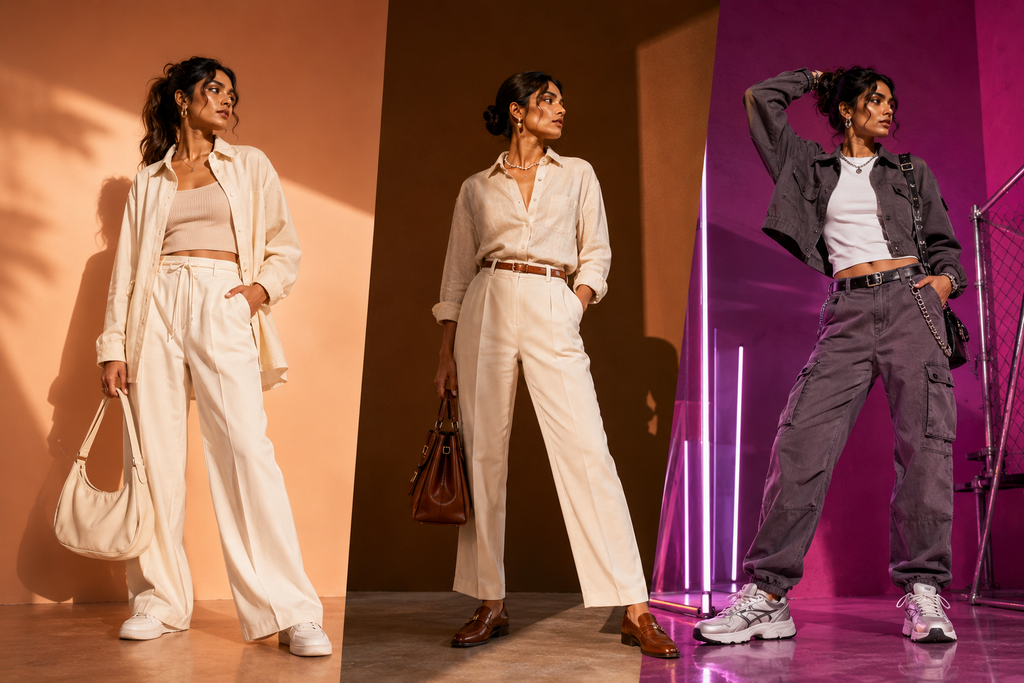
The “Old Money” look is better understood as quiet luxury: classic tailoring, restrained accessories and polished fabrics rather than conspicuous logos. Vogue India’s quiet luxury guide similarly focuses on familiar wardrobe pieces and thoughtful styling.
For warmer weather, translate the code instead of recreating European winter dressing. Choose cotton or linen button-downs over heavy Oxford layers, lightweight tailored trousers over dense wool, and fine-gauge knits or a shirt draped over the shoulders. Loafers, a structured bag, pearl jewellery, cream, navy, tobacco and warm brown will do much of the work.
Y2K and Tokyo Streetwear: Keep One Proportion Loud
Y2K and Tokyo streetwear are about attitude: baggy cargos, graphic leather jackets, platforms, wraparound shades, chunky silver details and moody neon lighting. If you worry oversized silhouettes will “swallow” your frame, focus on proportion rather than avoiding volume altogether.
Try one statement proportion at a time. Pair baggy cargos with a fitted tee or cropped layer. Wear a larger jacket over a visible waistline. Choose a shorter jacket for more leg definition, or show an ankle with a tapered cargo. These are styling options, not rules about what anyone should wear.
Use the render as creative direction. If leather and platforms do not suit your day, recreate the energy with sneakers, a utility bag and a dark overshirt instead.
Shop Less, Test More
Digital experimentation will not solve fashion’s waste problem by itself. As the Ellen MacArthur Foundation argues in A New Textiles Economy, reducing fashion waste requires broader changes in how clothes are made and used. But visualising an outfit can still support a more considered choice: fewer impulse purchases, fewer pieces bought for one imagined photoshoot and less buyer’s remorse.
Use a render to ask, “Do I like this aesthetic on myself?” Then use a fitting room, tailor or your existing wardrobe to ask, “Will I actually wear this?”
Frequently Asked Questions
Can AI tell me whether clothes will fit?
No. AI styling can help you compare colours, proportions and overall mood, but it cannot confirm sizing, comfort, fabric quality or garment drape.
How many Pinterest images should I use to identify my style?
Start with 20 to 30 saved images. Look for the colours, silhouettes, textures and accessories that appear repeatedly.
Do I need to copy a viral aesthetic exactly?
No. Keep the elements that appeal to you—such as tailored trousers, silver hardware or warm neutrals—and adapt the rest to your wardrobe, climate and comfort.
What should I test before buying a statement piece?
Compare colour, silhouette and styling first. A trench coat, oversized jacket or wide-leg trouser can look very different depending on its tone, length and what you wear with it.
Can visualisation help me shop more mindfully?
It can help you narrow down what is worth trying in real life, rather than buying every item that resembles a saved pin.
Your Pinterest board is not a standard you have to live up to. It is a starting point. Join the Fashually waitlist to secure free styling credits at launch, and see your next style era before you buy into it.