Table Of Content
- Smart Casual for a First Job Wardrobe on a Budget: What Actually Counts?
- Shop Your Wardrobe Before You Shop the Sales
- Four First-Week Outfit Formulas That Never Feel Overdone
- The corporate-ready formula: shirt + trousers + blazer
- The hybrid-office formula: knit + dark denim + third piece
- The creative-agency formula: relaxed tailoring + clean sneakers
- The modern ethnic formula: kurta + cigarette pants
- Read the Room: Adjusting Smart Casual by Workplace
- Test a First Job Wardrobe on a Budget Before Checkout
- Budget Mistakes That Make a First Job Wardrobe Cost More
- First-Day FAQ
- How many outfits do I need for my first job?
- Are clean sneakers appropriate for an office?
- Can I wear jeans to an internship?
- What should I buy first for a work wardrobe?
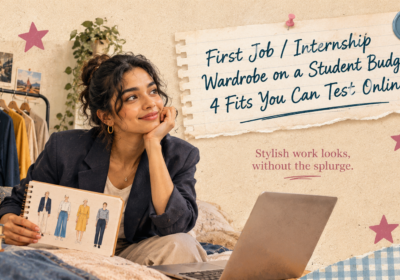
Building a first job wardrobe on a budget can feel strangely high-stakes. Hoodies, trainers and distressed denim may have carried you through university, but replacing your entire wardrobe before the first pay cheque is not the answer. The smarter move: start with what you own, add a few polished pieces, and build outfits that work harder than their price tags.
For most entry-level roles, the goal is smart casual rather than a corporate costume. Check your employer’s dress code, look at how people in the office dress, and test outfit combinations before you buy. A small, coordinated wardrobe can cover far more ground than a pile of one-off “work” clothes.
Smart Casual for a First Job Wardrobe on a Budget: What Actually Counts?

Smart casual sits between everyday casual wear and traditional business dress. It is not a fixed uniform: a finance internship may call for tailored trousers and loafers, while a creative agency may be perfectly happy with dark denim and immaculate sneakers. As Indeed’s guide to smart casual attire notes, workplace culture matters as much as the dress-code label.
| Category | Usually works | Usually misses the mark |
|---|---|---|
| Denim | Dark wash, straight leg, clean hem | Ripped, heavily faded or ultra-skinny jeans |
| Tops | Button-downs, heavyweight tees, fine knits | Thin graphic tees, club tops, oversized band shirts |
| Shoes | Loafers, leather flats, clean minimalist sneakers | Dirty running shoes, slides, flip-flops |
| Traditional wear | Solid cotton or linen kurtas with tailored trousers | Sheer or heavily embellished festive pieces |
The difference is structure, condition and intent. Your clothes need not be expensive, but they should be clean, pressed and comfortable enough for a commute and a full day at a desk.
Shop Your Wardrobe Before You Shop the Sales
Do a quick wardrobe audit before opening a shopping app. Pull out dark-wash straight-leg jeans, tailored or high-waisted trousers, button-down shirts, plain knits, cardigans, clean sneakers, flats and neutral bags. You may be one structured layer away from a functional capsule wardrobe.

- Two bottoms: one tailored trouser and one office-appropriate jean
- Three tops: a white or striped shirt, a fine-gauge knit and a heavyweight neutral tee
- One third piece: a blazer, structured cardigan, overshirt or light trench
- One polished shoe: loafers, pointed flats or simple leather sneakers
- One optional versatile piece: a crisp cotton kurta
Keep most of your palette neutral—navy, cream, grey, black or beige—then add one or two accent colours, such as olive, rust or powder blue. This makes mixing and matching much easier.
Fit is the real luxury signal. A thrifted blazer with correctly placed shoulders and sleeves that hit at the wrist will look sharper than an expensive jacket that overwhelms you. When buying second-hand, look for cotton, linen, wool blends and viscose, and factor a small alteration into the total cost.
Four First-Week Outfit Formulas That Never Feel Overdone

The corporate-ready formula: shirt + trousers + blazer
Wear a tucked-in button-down with high-waisted trousers, a structured blazer and loafers. It is a reliable choice for corporate internships, client meetings and offices where denim is uncertain.
Tucking in your shirt creates a shorter visual top and longer lower half, which gives the outfit a more tailored feel. Keep the blazer comfortably relaxed rather than dramatically oversized; polished should still mean you can move.
The hybrid-office formula: knit + dark denim + third piece
Pair a fitted fine-gauge knit or plain ribbed tee with dark-wash straight-leg denim. Add a blazer, structured cardigan or lightweight overshirt, then finish with flats, loafers or spotless minimalist sneakers.
The third piece does the heavy lifting here, taking jeans from weekend territory to intentional smart casual. For easy colour balance, match your top to your shoes and let the denim sit between them. Find more ways to make denim work in our guide to office-appropriate jeans.
The creative-agency formula: relaxed tailoring + clean sneakers
Combine wide-leg trousers with a relaxed button-down, fitted knit or tucked-in heavyweight tee. Add clean sneakers and one thoughtful accessory: a slim belt, structured tote or simple watch.
Keep one element fitted when the other is voluminous. Wide-leg trousers work best with a tucked or close-fitting top, while an oversized shirt pairs more neatly with straighter trousers. A navy trouser, white shirt and burgundy accessory is an affordable way to bring in personality without losing polish.
The modern ethnic formula: kurta + cigarette pants
A solid cotton or linen kurta with cigarette pants or cropped tailored trousers is a practical office option. Choose clean lines—a band collar, subtle placket, restrained print or monochrome palette—and add leather flats, loafers or low-profile mules.
If your office is more formal, layer with a structured cardigan or blazer. Keep the kurta length and trouser shape balanced: a straight or cropped pant gives a longer kurta useful structure. Save ornate embroidery, sheer fabrics and festive dupattas for outside the workday. Vogue India’s workwear kurta styling guide offers further inspiration.
Read the Room: Adjusting Smart Casual by Workplace
| Workplace | Denim | Footwear | Layers and colour |
|---|---|---|---|
| Corporate | Avoid unless explicitly accepted | Loafers, flats, closed-toe shoes | Blazers, shirts, restrained neutrals |
| Hybrid or startup | Dark, clean denim often works | Loafers, flats, clean sneakers | Cardigans, blazers, soft colour accents |
| Creative agency | Dark denim and wider silhouettes may work | Minimal sneakers, loafers, boots | More texture and colour, still polished |
When in doubt, dress slightly smarter on day one and adjust from there. A blazer is useful, not compulsory; a crisp shirt or quality knit can create the same sense of finish. For a fuller breakdown, see MasterClass’s smart casual dress code guide.
Test a First Job Wardrobe on a Budget Before Checkout

Pinterest can spark an idea; virtual outfit testing can help you decide whether it works with your proportions and existing clothes. With Fashually’s AI Virtual Try-On, you can upload a simple selfie and compare outfit formulas before committing to a purchase.
Try a cropped blazer with wide-leg trousers, compare a green kurta with beige versus black trousers, or work out whether a new purchase genuinely creates several outfits. Use it as a visual sandbox, not a sizing guarantee: always check garment measurements, fabric composition, return policies and your employer’s guidance.
Budget Mistakes That Make a First Job Wardrobe Cost More
Do not buy everything at once. Start with one versatile trouser, one polished top, one third piece and comfortable work shoes. Give yourself a week or two in the office before filling any gaps.
Skip trend tops that only work with one bottom, and do not rely on black alone. Navy, cream, grey and beige create more combinations and make a small wardrobe feel less repetitive. Finally, look after what you own: steamed clothes, clean shoes and a lint roller can make budget pieces look considered rather than unfinished.
First-Day FAQ
How many outfits do I need for my first job?
Start with four to six repeatable combinations. A small rotation is enough if the pieces share colours and can be mixed differently.
Are clean sneakers appropriate for an office?
They can be in hybrid and creative workplaces, especially if they are minimalist and spotless. For corporate offices, loafers or flats are the safer first-day choice.
Can I wear jeans to an internship?
Dark, straight-leg jeans without rips or fading often work in casual offices. If you are unsure, wear tailored trousers on day one and assess the office standard.
What should I buy first for a work wardrobe?
Prioritise a versatile trouser, a polished top, a structured layer and comfortable shoes. These four pieces will create more outfits than several trend-led purchases.
Before leaving for your first day, check that you can sit, walk and commute comfortably; that the outfit is clean, pressed and weather-appropriate; and that it still feels like you. A smart first job wardrobe on a budget is not about looking expensive. It is about buying less, styling better and making every piece earn its place.