Table Of Content
- Why Instagram Thrift Shopping Can Go Wrong So Fast
- The Two-Minute Check Before You DM “Mine”
- Five Instagram Thrift Trends That Need a Closer Look
- Y2K denim: the rise is everything
- Oversized vintage blazers: relaxed or swallowed whole?
- Graphic tees and retro jerseys: worn-in, not worn out
- ’90s slips: pretty, but unforgiving
- Leather jackets: check the shoulders before the cool factor
- Instagram Thrift Shopping Is Easier When You Compare Clothes, Not Labels
- Use Fashually as a Styling Reality Check
- Shop Instagram Thrift Trends Without the Regret
- Quick Questions Before You Claim the Piece
- How do I know whether vintage clothing will fit me?
- Should I compare a thrifted garment to my body measurements?
- What flaws should I ask an Instagram thrift seller to show?
- Can AI virtual try-on tell me if a thrifted item will fit?
- Are non-returnable Instagram thrift purchases worth it?
Instagram thrift shopping has a particular kind of adrenaline: the Sunday 6 PM drop, the perfectly styled flat-lay, the race to comment “mine” before the inevitable “sold.” But that rush can turn into thrift anxiety quickly when a non-returnable ₹1,500 blazer arrives looking less Pinterest cool and more 1980s news anchor.
Unlike conventional retailers, Instagram thrift stores in India often sell one-of-one pieces through DMs, UPI payments and final-sale policies. A great listing photo is not enough. Before you claim an item, check its fit, condition and whether the silhouette actually works for you—not just the model wearing it.
Why Instagram Thrift Shopping Can Go Wrong So Fast
The biggest trap in online thrift shopping in India is treating a size label as proof of fit. Vintage sizing is inconsistent: a 1990s “M” may fit more like a current XS, while Japanese and European vintage imports can run smaller than US or UK pieces. Vanity sizing has also shifted over the decades, so labels are useful context, not a buying decision.
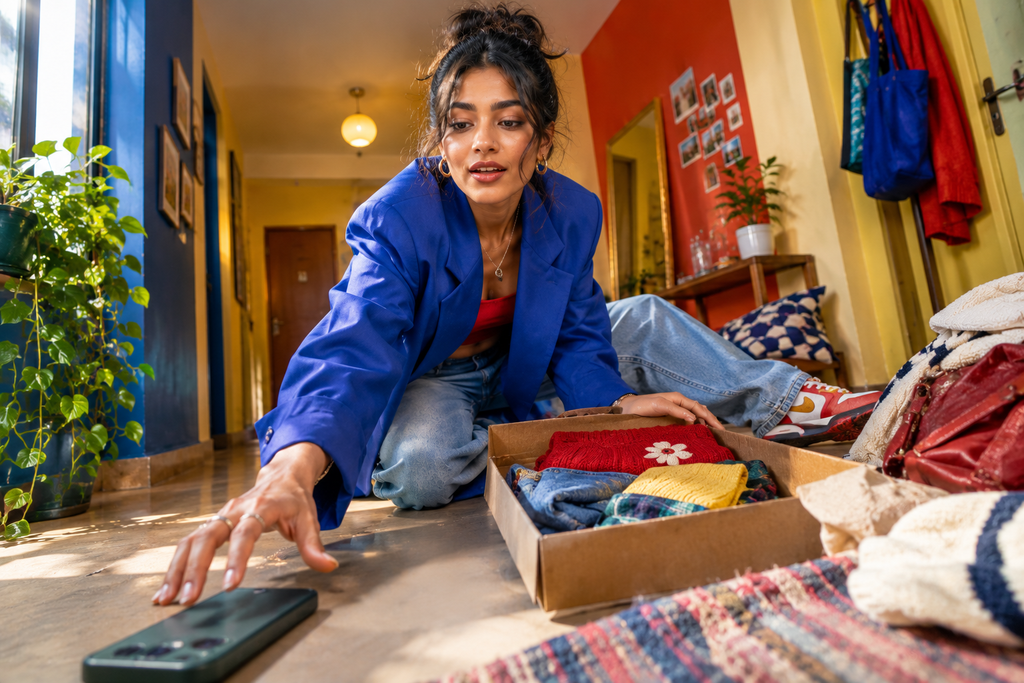
Then there is the styling trap. On-body photos can involve strategic posing, oversized layering, tucked fabric, clips at the back or flattering lighting. A satin slip may be pinned to the model; a boxy blazer may look intentional only because it is worn by someone much taller.
This is why flat-lay measurements matter more than “fits S/M.” Ask for garment measurements, then compare them with an item you already own and love. As Fashionista’s guide to buying vintage online notes, measurements and clear condition details are crucial when you cannot inspect a piece in person.
The Two-Minute Check Before You DM “Mine”
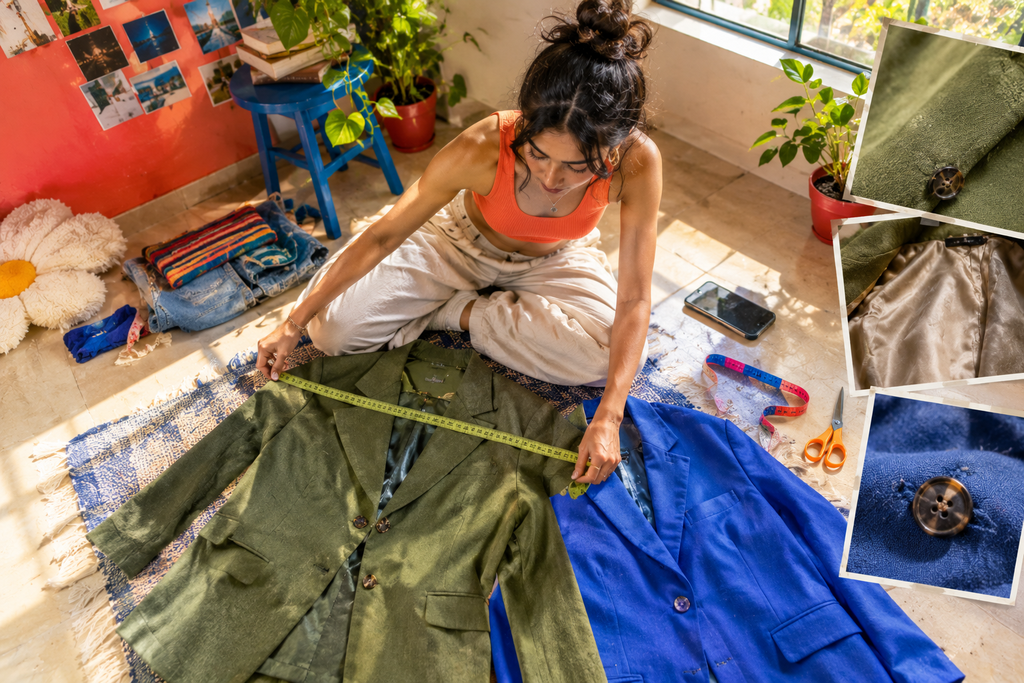
- Check the seller: Review highlights, tagged customer posts, shipping details and policies. Confirm whether the piece is vintage, deadstock, upcycled or contemporary secondhand.
- Understand the risk: Ask about cancellations, damaged-item policies and exchanges. Many small sellers cannot accept returns, so only pay when you are comfortable with a non-returnable purchase.
- Request useful measurements: For tops and jackets, ask for shoulder-to-shoulder, pit-to-pit, sleeve and length. For bottoms, request waist, hip, rise and inseam. For dresses, ask for bust, waist, hip, length and strap measurements.
- Ask for condition proof: Request natural-light photos and close-ups of labels, fabric, lining, closures and flaws. Look for pilling, thinning fabric, stretched necklines, stains, fading, repairs and odour.
- Compare like with like: Lay your best-fitting jeans, blazer or dress flat and measure it. Compare those numbers with the seller’s garment measurements—not your body measurements alone. Build in ease for movement, especially with woven fabrics.
For a closer look at taking measurements, see our guide on how to measure yourself accurately for online fashion shopping.
Five Instagram Thrift Trends That Need a Closer Look
Y2K denim: the rise is everything
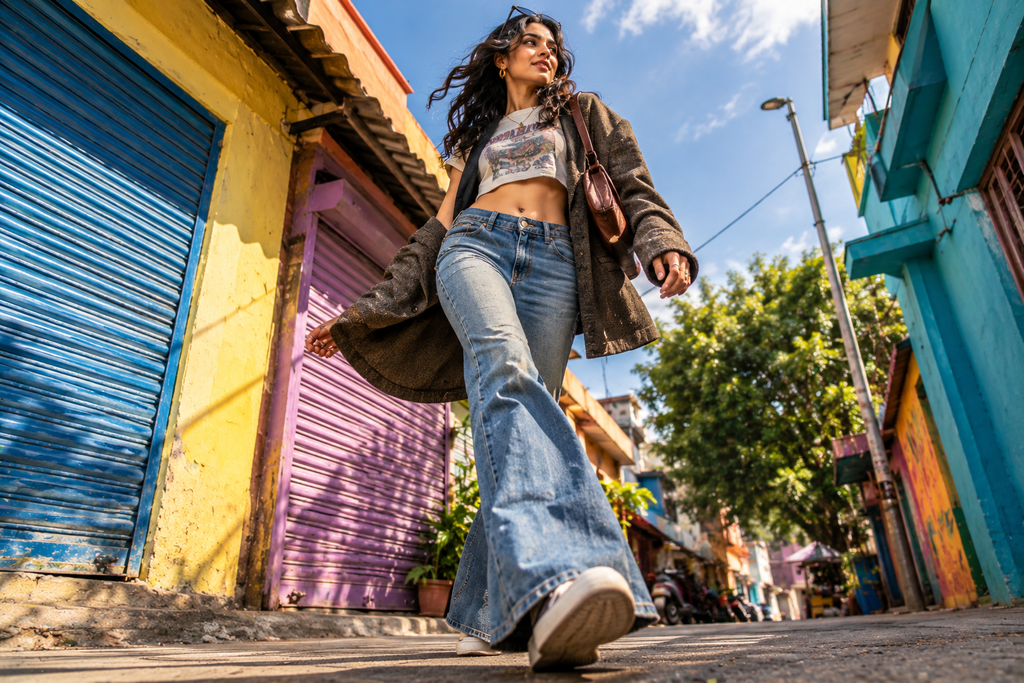
Low-slung bootcut jeans, cargo denim and embellished back pockets are back with peak-2000s energy. The catch? Low-rise jeans sit on the hips rather than the natural waist, so a pair can technically fit but still dig in, slide down or throw off your proportions.
Check the flat waist, hip, front rise, back rise and inseam. Ask whether the denim has stretch, too: rigid vintage denim needs more room than modern stretch jeans. Pocket placement matters as well; low back pockets can visually change the shape of the seat.
If you have a longer torso, low-rise can feel especially low. If you are petite, a long bootcut inseam may overwhelm your frame. Our guide to styling Y2K fashion for different body shapes can help you identify silhouettes you will actually rewear.
Oversized vintage blazers: relaxed or swallowed whole?
Power shoulders, tweed, double-breasted cuts and menswear tailoring make oversized vintage blazers an Instagram favourite. But “oversized” has a fine line: one person’s relaxed fit is another person’s swallowed-alive moment.
Prioritise shoulder-to-shoulder measurement, sleeve length, pit-to-pit width and total length. Heavy shoulder pads can make a shorter frame look boxy, while tight armholes can make an otherwise roomy blazer uncomfortable. Ask whether it is lined and whether the shoulders are structured or softly constructed.
Graphic tees and retro jerseys: worn-in, not worn out
Faded band tees, collegiate sweatshirts and retro racing jerseys can be easy thrift wins—until the fabric tells a different story. Vintage cotton can shrink, become stiff, thin out or develop a stretched “bacon” neckline that changes the whole drape.
Ask for chest width, shoulder width and length, plus daylight photos of the neckline and print. Check whether the fabric is opaque enough to wear alone and whether the graphic is cracked, peeling or intentionally distressed. “Oversized” styling can also be misleading if the seller has simply sized up or tucked in a too-long tee.
’90s slips: pretty, but unforgiving
Bias-cut satin slips, lace-trim dresses and grunge florals are the romantic side of secondhand fashion. They also demand precision. Bias-cut silhouettes are designed to skim curves, so even a small mismatch at the bust or hips can cause pulling, twisting or sheerness.
Ask for bust, waist, hip and length measurements, plus lining details, stretch and strap adjustability. Inspect delicate straps, lace trim and underarm areas for damage. A slip should have enough ease to move in; do not buy based on the smallest possible measurement simply because the listing says “fits S.”
Leather jackets: check the shoulders before the cool factor
A distressed bomber, racing jacket or long leather coat can be a genuine grail—or an expensive regret. Vintage leather is often heavy, stiff and difficult to alter, especially through the shoulders and armholes.
Check shoulder width, chest, sleeve and jacket length first. Then ask for close-ups of cracking, peeling coating, dry patches, hardware, lining and cuffs. Confirm whether the piece is genuine leather or synthetic, as care needs and ageing differ significantly.
Instagram Thrift Shopping Is Easier When You Compare Clothes, Not Labels
When a seller sends flat-lay measurements, compare them with a similar garment you already own rather than relying on a vintage size label. Measure your favourite-fitting blazer, jeans or dress across the same points the seller has listed.
Think about intended fit, too. A fitted slip needs different ease from a relaxed blazer, and stretch denim behaves differently from rigid cotton. The label tells you what the garment was once called; the measurements tell you whether it has a realistic chance of working now.
Use Fashually as a Styling Reality Check
Measurements are essential, but numbers do not always explain proportion. A 42-inch blazer chest might sound workable yet still sit too wide at the shoulders or look too long with your usual trousers.
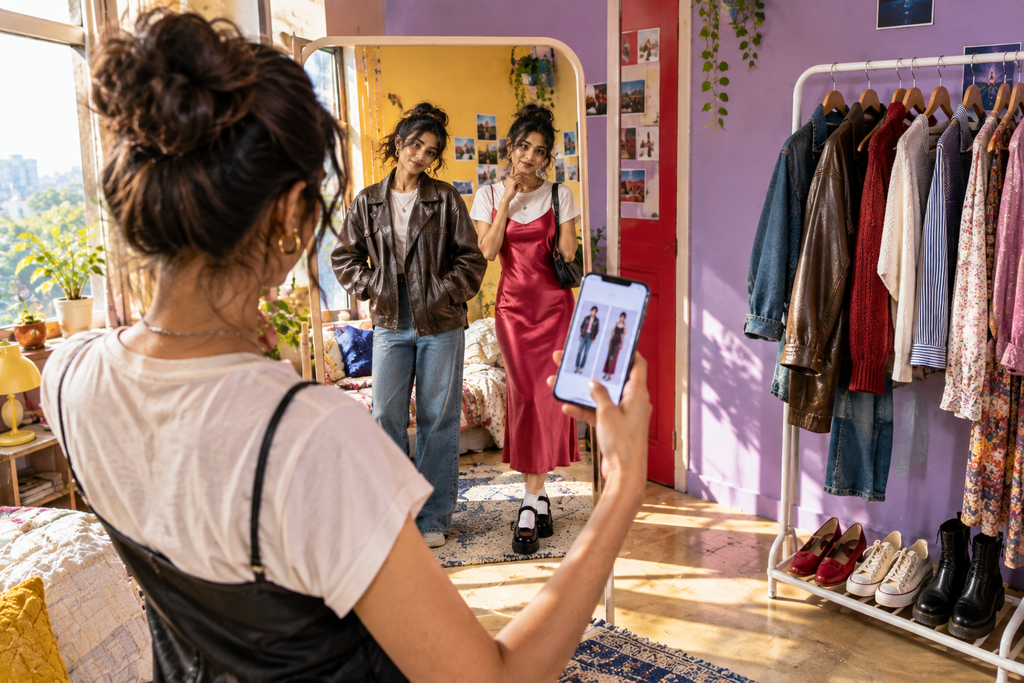
That is where Fashually’s AI Virtual Try-On can be useful as a visual test. Upload a selfie and explore yourself in the kind of item you are considering—an oversized blazer, low-rise Y2K denim, graphic tee, slip dress or leather jacket. It can help you assess the overall silhouette, colour direction and whether the look feels aligned with your personal style.
Use it to ask: Would I wear this with what I already own? Does this actually feel like me?
It is not a replacement for garment measurements. AI fashion visualisation cannot guarantee exact fit, fabric drape, stretch, comfort, texture or real-world condition. But it can help bridge the gap between “this looks great on the seller” and “I can picture it in my wardrobe.” Learn more about how to virtually try on clothes before buying online.
Shop Instagram Thrift Trends Without the Regret
Instagram thrift culture has made secondhand fashion more personal, creative and accessible—something Vogue India has explored in its look at Instagram-led thrifting. But sustainable shopping only works when the pieces get worn.
Before paying, save the listing, note the measurements and price, confirm the policy, inspect condition photos and picture at least three outfits you could make with it. Then pause. Thrift FOMO is real, but a sold-out item is better than an unworn item sitting in your cupboard.
- Seller feedback and policies reviewed
- Garment measurements confirmed
- Condition checked in natural light
- Vintage sizing compared with a favourite garment
- Non-returnable risk understood
- Fashually used for proportion and styling inspiration
- Cost-per-wear considered
Quick Questions Before You Claim the Piece
How do I know whether vintage clothing will fit me?
Ask for flat-lay garment measurements and compare them with a similar item you already own. Do not rely on S, M, L or a vintage numerical label alone.
Should I compare a thrifted garment to my body measurements?
It is more reliable to compare it with a well-fitting garment, as that accounts for ease, intended silhouette and fabric behaviour.
What flaws should I ask an Instagram thrift seller to show?
Request clear photos of the neckline, underarms, lining, closures, fabric, labels and any stains, fading, thinning, pilling, repairs or damage.
Can AI virtual try-on tell me if a thrifted item will fit?
No. It can help you visualise silhouette, proportion and styling, but it cannot confirm exact fit, comfort, stretch, fabric drape or condition.
Are non-returnable Instagram thrift purchases worth it?
They can be, provided you have checked the seller, measurements, condition and policy—and are comfortable taking on the risk before paying.
The best Instagram thrift shopping finds are not simply the rarest or most viral. They are the pieces that fit your body, your life and your wardrobe well enough to become favourites.