Table Of Content
- Gen Z Festive Styling Starts With One Thing: Balance
- Lookbook 1: The Corset sari That Does All the Talking
- Lookbook 2: A Blazer and Lehenga, Minus the Predictability
- Lookbook 3: The Shirt-and-Ethnic-Skirt Formula for Actual Repeat Wear
- Lookbook 4: Gen Z Festive Styling With a Drape That Moves
- The Final Edit: Accessories, Color and Comfort
- Test the Outfit Before the Group Chat Does
- Frequently Asked Questions About Indo-Western Festive Outfits
- How do I make an Indo-Western outfit look intentional?
- What shoes work best with a lehenga for a modern look?
- Can I wear an oversize shirt with ethnic wear?
- How can I make festive outfits more sustainable?
Why buy another outfit you will wear once when your wardrobe can already do most of the work? Fashionably promotes using existing pieces to create wearable, versatile looks. This approach helps you stretch your budget and keep closet clutter under control. It shifts focus from quantity to quality in everyday styling.
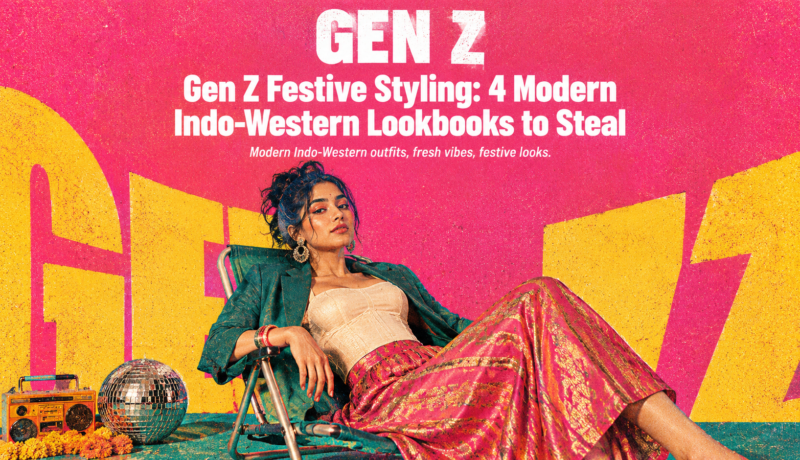
Moreover, Gen Z festive styling is moving beyond the old ‘new ethnic set for every occasion’ rule. It favors remixed looks, such as a blazer over a lehenga, boots with a sari, or a crisp shirt tucked into a Banarasi skirt.
Modern Indo-Western fashion is not about dressing up in a costume.
It is about mixing heritage textiles with familiar staples in a way that feels personal.
This approach is comfortable and worth repeating.
Additionally, here are four fusion festive wear formulas for Diwali parties, weddings, college fests and smaller celebrations.
Gen Z Festive Styling Starts With One Thing: Balance
The line between an intentional Indo-Western outfit and a chaotic one usually comes down to proportion. Let one piece lead, then use the other to create contrast.
A full lehenga, Banarasi skirt or flared palazzo looks best with a fitted or tailored top. Slim dhoti pants and trousers, meanwhile, can handle more volume above: an oversize shirt, cape or blazer.
Fabric matters too. Pair structured pieces with fluid organza, georgette or chiffon so the outfit does not feel stiff or bulky. Texture contrast is an easy shortcut to depth: raw silk with satin, denim with brocade, or a sheer drape against sharp tailoring.
Finally, keep the color story focused. Go tonal in wine, ivory or black, or combine jewel tones such as emerald and plum. When the silhouette is doing something unexpected, a cohesive palette keeps it polished.
Lookbook 1: The Corset sari That Does All the Talking
The vibe: Regencycore meets late-night Diwali glamour.
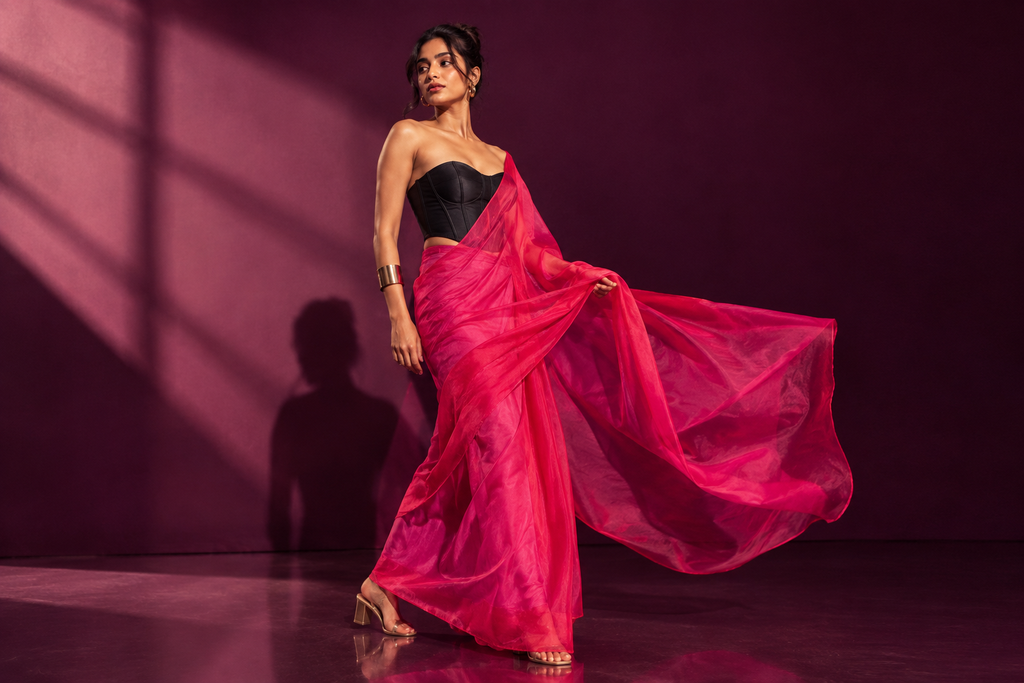
A structured corset instantly updates a classic sari. Swap the matching blouse for one in satin, brocade or soft leather, then choose a lightweight organza, chiffon or georgette sari. The contrast between the waist-defining top and the fluid drape is exactly what makes the pairing work.
Try a black corset with a hot-pink organza sari for high contrast, or an ivory satin corset with a tonal beige or gold sari for a softer take. Keep the drape relatively clean; complicated pleats can compete with the corset’s shape.
A sari does not require a matching blouse or even a traditional petticoat. It can be styled over trousers, cycling shorts or a slim skirt, and paired with a corset, turtleneck or button-down. For more ideas, see Femina India’s guide on how to style a corset with a sari.
Finish with block-heeled mules, one metallic cuff and either hoops or jhumkas—not both.
Lookbook 2: A Blazer and Lehenga, Minus the Predictability
The vibe: festive opulence with boardroom-level confidence.
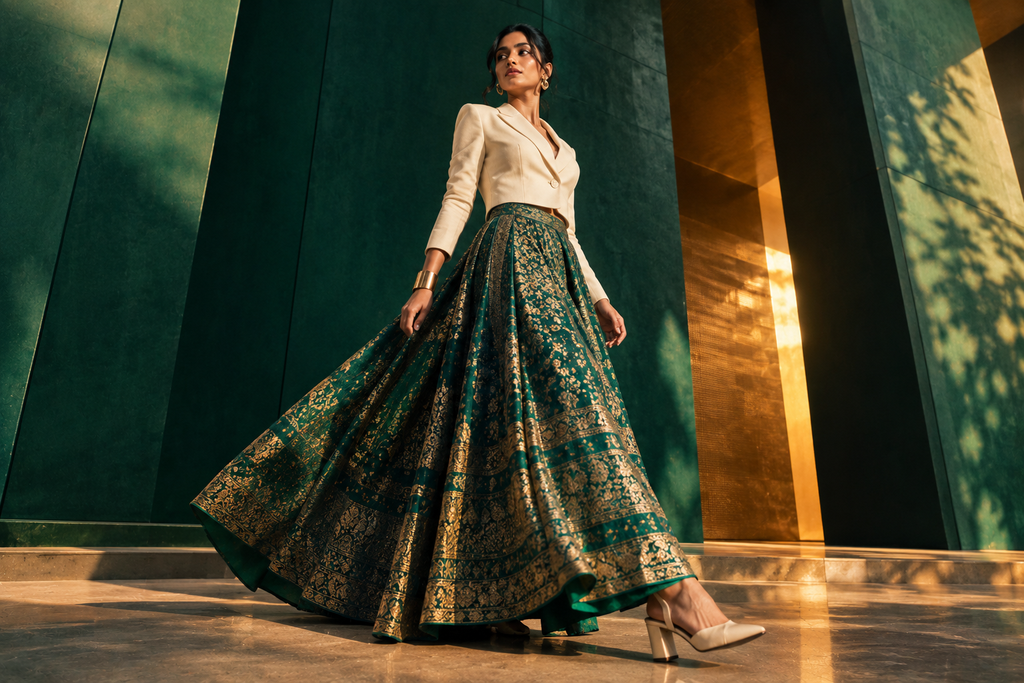
A tailored blazer gives a lehenga or Banarasi skirt a clean, contemporary frame. It is especially useful for winter weddings, cocktail events and Diwali card parties, and it makes a statement skirt easier to re-wear.
- Go cropped: Button a fitted or cropped blazer as a top with a high-waist lehenga. The result is sharp and waist-defining.
- Go oversize: Start with a simple crop top or fitted bralette, then layer an oversize blazer on top. Add a statement belt if you want more shape.
A black tuxedo blazer with a gold lehenga always works for evening. For daytime, try an ivory blazer with a jewel-toned Banarasi skirt or a pastel blazer over a printed lehenga. Vogue India’s guide to styling a blazer with a lehenga shows why the combination has become an occasion wear staple.
For footwear, chunky sneakers make the look younger, combat boots add edge, and block-heeled mules are the most polished choice. Keep jewelry edited: oxidized earrings or a geometric cuff are enough.
Lookbook 3: The Shirt-and-Ethnic-Skirt Formula for Actual Repeat Wear
The vibe: relaxed, smart and made for a college festival.
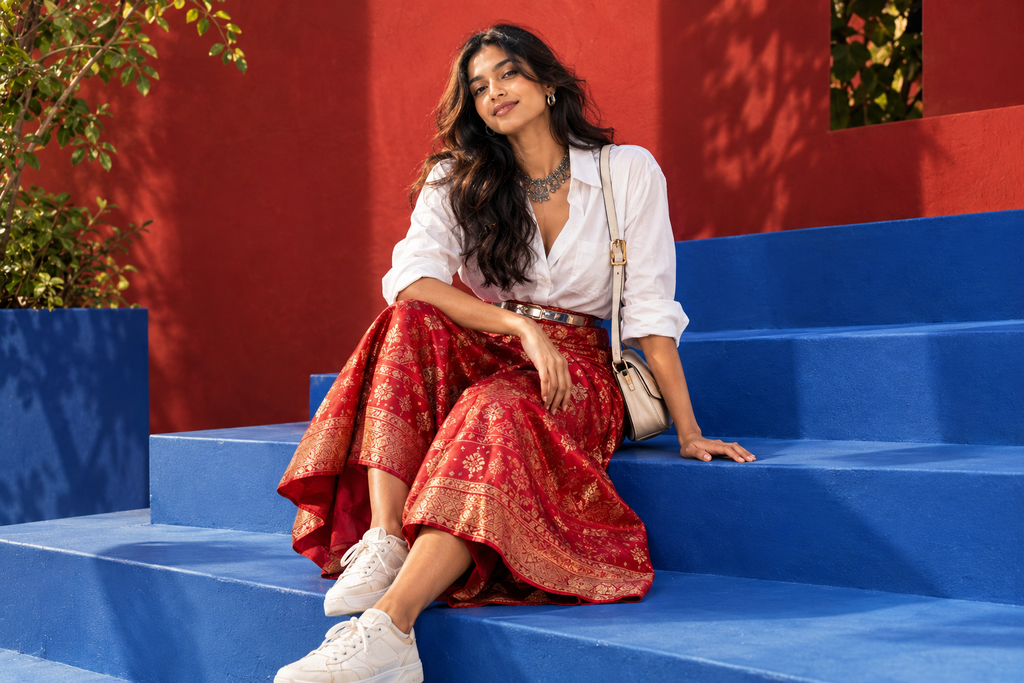
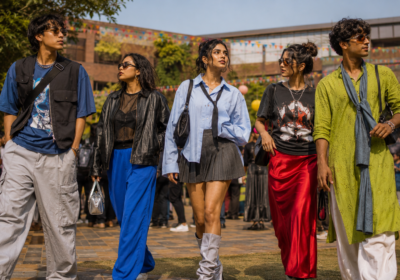
For comfortable Indo-Western outfits that still feel styled, begin with the shirt you already own. A crisp oversize white button-down, striped poplin shirt or silk shirt can transform dhoti pants, flared palazzi or a traditional skirt.
Try a partial front tuck into high-waist dhoti pants, leaving the back loose. Roll the sleeves to the forearm, pop the collar and add a chunky oxidized silver necklace beneath it. With a Banarasi skirt, choose a shirt that fits neatly through the shoulders and use a slim belt to define the waist.
This is high-low styling at its most practical: one ornate textile, one everyday basic. It is also a simple way to make sustainable festive wardrobe choices, since both pieces can be worn separately long after the event. Add sneakers for campus, metallic sandals for a house party, and a compact shoulder bag instead of a traditional potli.
Lookbook 4: Gen Z Festive Styling With a Drape That Moves
The vibe: asymmetric, experimental and built for the camera.
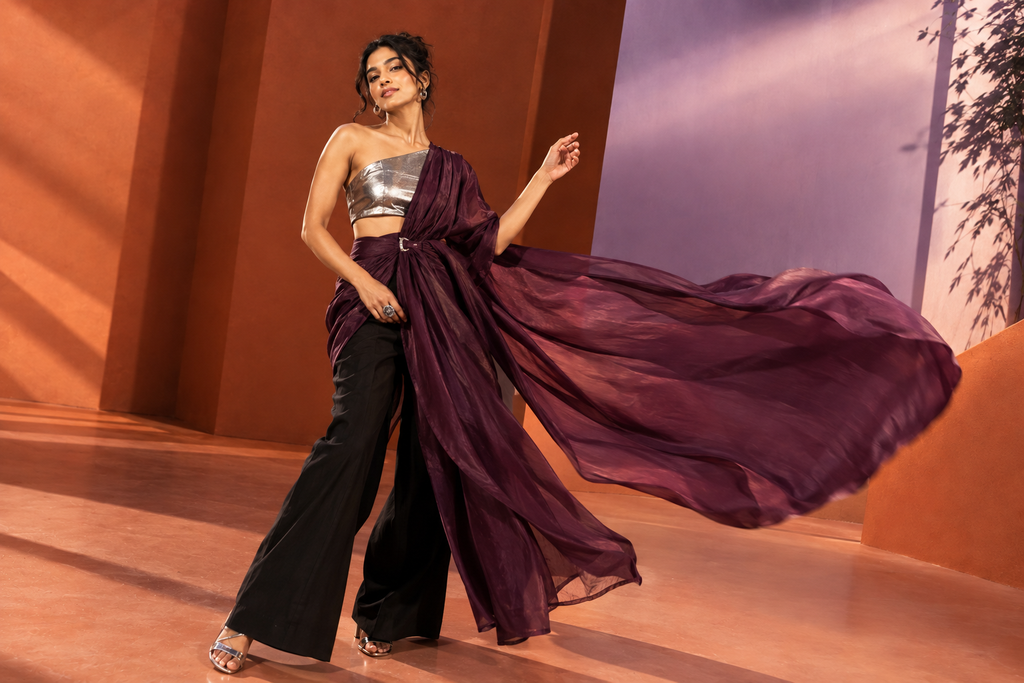
Think of a sari or dupatta as a styling tool rather than a fixed garment. Start with a modern base—a metallic bodysuit, mock-neck top, halter or one-shoulder crop top—then use the drape as the dramatic layer.
For a toga-inspired silhouette, drape one end over a shoulder and secure the fabric at the waist over wide-leg trousers. Or wrap a heavy dupatta around the neck like a scarf, let one end fall down the back, and layer it over a monochrome co-ord.
Secure everything before you leave. Use discreet safety pins where the fabric crosses the torso, make sure you can sit and dance, and avoid very slippery textiles for a long event. Georgette moves beautifully with structured tops, while organza holds its shape and a silk dupatta can have enough presence to replace a jacket.
The Final Edit: Accessories, Color and Comfort
Accessories should connect the Western and ethnic elements, not introduce a third competing idea. If you are wearing a shirt and Banarasi skirt, bring in jhumkas or an oxidized choker. If the outfit already leans traditional, such as a lehenga with a blazer, choose modern hoops, a metallic cuff or a clean statement belt.
For color and texture, try emerald with antique gold, plum with silver, denim blue with red Banarasi silk, or all ivory with one bright accessory. Satin and matte khadi, georgette and tailoring, or silk and denim all create contrast without looking overworked.
Most importantly, dress for movement. Breathable layers, stable shoes and secure drapes will always look better than an outfit that needs constant fixing.
Test the Outfit Before the Group Chat Does
Some combinations sound great in theory but are difficult to picture: Will the oversize blazer overwhelm the lehenga? Does the corset work with that sari? Is the dupatta drape too much?
Fashionably offers an AI-powered fashion visualization space to explore those ideas before you commit. Upload a clear photo and use AI Virtual Try-On to compare Indo-Western combinations, accessories and drapes. It can help you test proportions and color direction before shopping—or rediscover pieces already in your wardrobe.
Explore how virtual try-on technology works when creating festive mood boards or outfit concepts. Visualizations are for creative exploration, not a guarantee of exact fit, fabric feel or real-world garment appearance, but they can make an experimental look feel much less intimidating.
Frequently Asked Questions About Indo-Western Festive Outfits
How do I make an Indo-Western outfit look intentional?
Choose one statement element, balance the proportions, and keep the colors connected. A voluminous ethnic skirt needs a fitted top, while slim dhoti pants can take an oversize blazer or shirt.
What shoes work best with a lehenga for a modern look?
Chunky sneakers bring a youthful feel, combat boots add edge, and block-heeled mules work well for weddings and evening events. Choose footwear you can comfortably stand and dance in.
Can I wear an oversize shirt with ethnic wear?
Yes. Partially tuck it into dhoti pants or a high-waist skirt, roll the sleeves and reveal some wrist or waist to maintain shape. A slim belt can help define the silhouette.
How can I make festive outfits more sustainable?
Build looks around versatile separates you already own: blazers, shirts, belts, boots and simple tops. Pair them with saris, lehengas and dupattas you can restyle for different occasions.
Traditional roots. Your style. A whole new look.