Table Of Content
- What a Traditional Fashion Shoot Can Really Cost
- How to Get Free Fashion Editorial Photos Without a Photographer
- How to Get Free Fashion Editorial Photos That Look Intentional
- From One Selfie to a Full Editorial Story
- Build a Small Portfolio, Not an Endless Feed
- “Free” Has Fine Print
- Quick Answers Before You Generate
- Can AI fashion photos replace a professional photographer?
- Do I need a professional headshot to create AI editorial images?
- Can I use AI-generated fashion photos in a modeling portfolio?
- Are AI outfit images accurate for fit and sizing?
- What should I check before downloading AI-generated images?
- One Photo, Many Fashion Directions
Learning how to get free fashion editorial photos once meant calling in favors.
Additionally, this involved borrowing clothes, finding a friend with a camera, scouting a photogenic wall, and hoping the weather cooperates.
A polished High Fashion, Editorial, No Photographer shoot can involve a photographer, studio, stylist, hair and makeup artist, wardrobe, retouching.
Now there is another option.
Moreover, an AI fashion photoshoot can turn one strong selfie into a set of High Fashion, Editorial, No Photographer themed images.
From crisp studio portraits and beauty campaigns to cinematic street style and digital couture.
What a Traditional Fashion Shoot Can Really Cost
A traditional shoot can be worth every dollar when the brief calls for it. But the cost explains why it remains out of reach for many emerging models and creators.
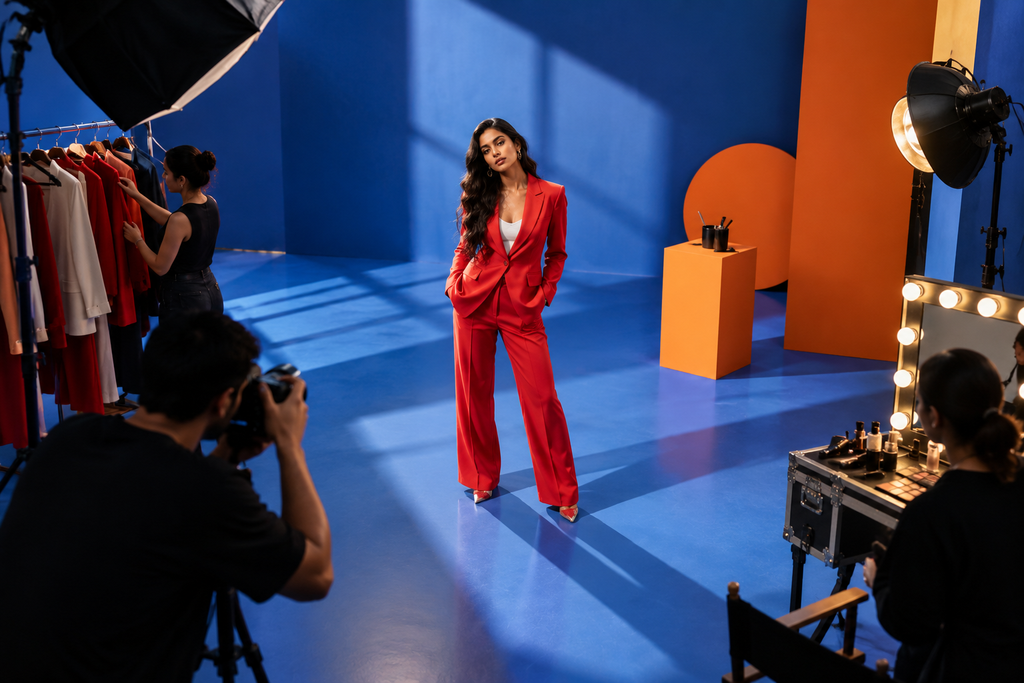
According to Peerspaces’s guide to fashion photographer costs, photographer rates commonly range from roughly $75 to $250 or more per hour. Experienced editorial and campaign photographers may charge considerably more through day rates. And that is only one line item.
- Studio rental: often $50–$200 per hour
- Styling and wardrobe pulls: $300–$1,000 or more
- Hair and makeup: around $150–$500 or more
- Equipment, travel, assistants, and location fees
- Editing and retouching, often charged per final image
Depending on the city, usage rights, team experience, and production scale, one concept can easily cost $1,000 to $5,000 or more. Then there is the less visible expense: coordinating schedules, preparing garments, traveling to set, and committing to whatever lighting, poses, and location you captured that day.
How to Get Free Fashion Editorial Photos Without a Photographer
A virtual photoshoot uses generative AI to create new visual concepts from a reference image. Instead of physically placing you in a silk gown under studio strobes, it generates an editorial-style image based on your photo, chosen aesthetic, outfit direction, setting, and pose.
That makes it useful for testing a runway mood before a real shoot, creating a consistent social feed, building moodboards, or exploring a virtual wardrobe without buying an outfit for a single post. McKinsey’s report on generative AI in fashion notes the technology’s potential to speed up creative workflows and lower barriers to content generation.
The important word is concept. AI imagery works well for visualization and fashion content creation. It is not a substitute for accurate e-commerce photography, verified garment fit, or any campaign that needs to show a real product exactly as sold.
How to Get Free Fashion Editorial Photos That Look Intentional
The most convincing virtual photoshoots begin with a clear brief, not a vague request for “high fashion.” A strong reference photo and a specific visual direction will usually produce more believable results.
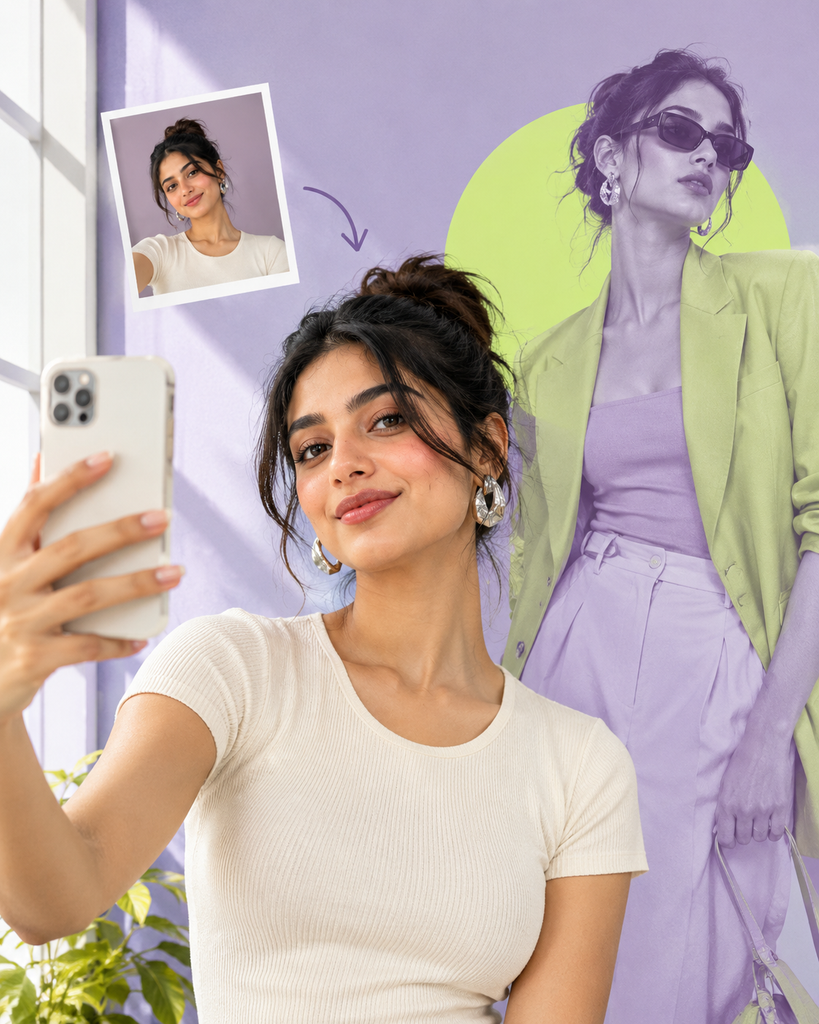
- Start with a clean seed photo. Use bright, indirect daylight, ideally facing a window. Choose a plain background, hold your phone at eye level, and take a straight-on portrait or mid-shot. Keep your face visible and wear a simple fitted top so the tool can better read your shoulders and proportions.
- Choose one fashion story. Think like an editor: textured tweed in a soft-lit Parisian studio, metallic runway glamour with direct flash, gritty street style at dusk, or a minimalist beauty image with sculptural shadows.
- Write a proper visual brief. Include the outfit, mood, pose, lighting, camera angle, and location. For example: Editorial full-body fashion portrait, tailored black suit with exaggerated shoulders, concrete gallery setting, direct flash, confident neutral expression, glossy magazine campaign aesthetic.
- Generate and refine. Use a tool such as Fashually to explore variations from your reference image. How Fashually’s AI fashion photoshoot works follows this process: upload one photo, then test outfits, poses, backgrounds, and visual directions.
- Edit with a critical eye. Check hands, teeth, jewelry, garment seams, body proportions, and facial consistency. Keep the strongest frames and refine the concept rather than posting every generation.
From One Selfie to a Full Editorial Story
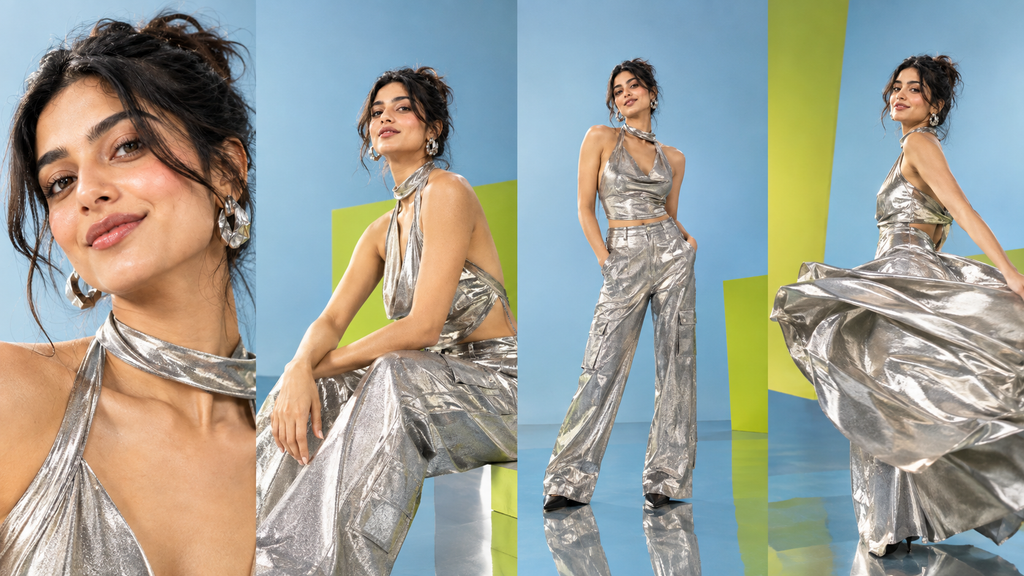
The best AI-generated fashion editorials feel connected. Rather than generating unrelated images, create a small series in one visual language: a close-up, a three-quarter portrait, a full-body look, and one frame with movement.
For couture, try: Full-length editorial portrait in an architectural ivory gown, dramatic fabric movement, pale gray seamless studio, soft directional lighting, luxury magazine cover mood.
For streetwear: Nighttime street-style editorial, oversized leather bomber and wide-leg trousers, wet pavement reflections, candid walking pose, grainy flash photography, downtown energy.
For beauty: Close-up beauty campaign, luminous skin, clean pulled-back hair, sculptural silver earrings, pale blue background, crisp studio lighting, contemporary fashion magazine.
Want to test styling before you shop? Fashually’s AI outfit generation can help visualize combinations. Treat the results as inspiration, not a promise of exact fit, fabric texture, sizing, or real-world availability.
Build a Small Portfolio, Not an Endless Feed
If you are figuring out how to build a modeling portfolio for free with AI, prioritize range over volume. Six polished images will usually do more for you than 30 near-identical portraits.
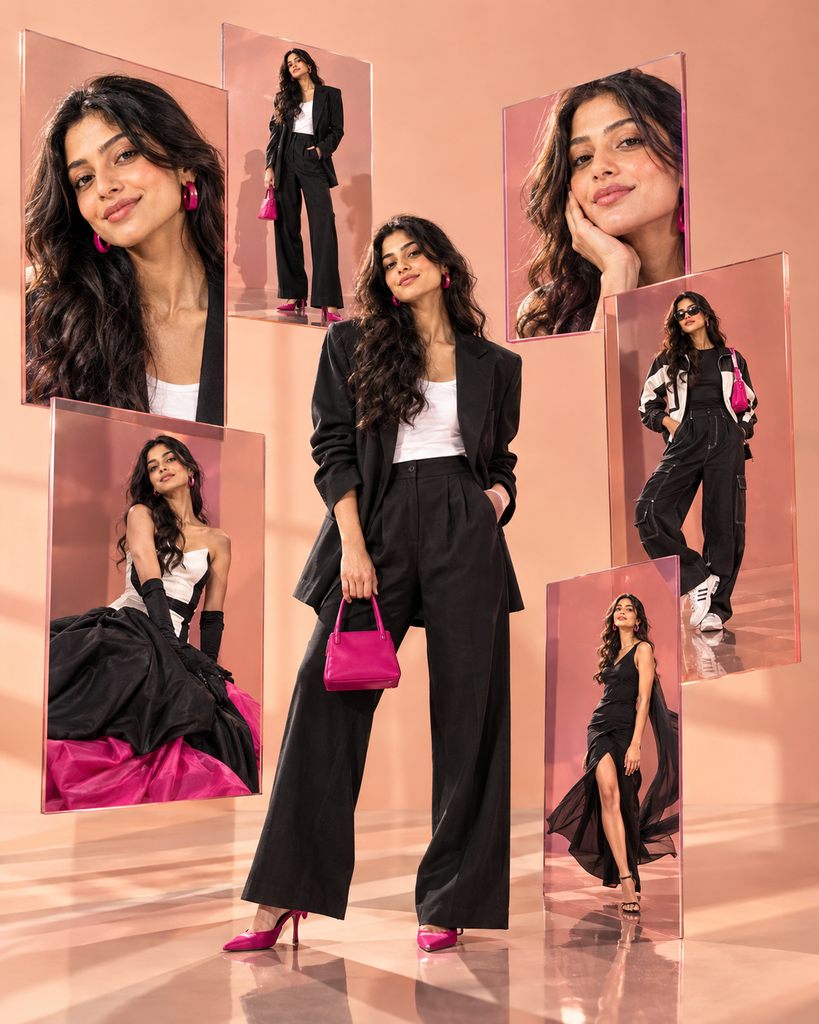
- A clean, natural-looking headshot
- A full-body image in simple styling
- A close-up beauty portrait
- A minimalist studio editorial
- A street-style or lifestyle concept
- One high-drama fashion image that shows range
AI can help aspiring models and creators test angles, find an aesthetic, and build a reference board for a future professional shoot. Be transparent when sharing it publicly. Do not present a simulated campaign as a paid commission, publication feature, or shoot in a physical designer garment. Agencies and clients may also require unedited digital or specific submission images, so follow their instructions closely.
“Free” Has Fine Print
A free AI fashion photoshoot may mean a limited trial. It may include a small number of generations, watermarked downloads, or restricted export resolution.
Before you build a workflow around any platform, check how many images are included, whether commercial use is allowed, who owns the output, and what happens to the photo you upload.
Only upload images you own or have permission to use. Avoid generating images of other people without consent, particularly where the result could be misleading or commercially sensitive. Copyright and commercial-use rules around AI imagery are still evolving; the World Intellectual Property Organization’s AI resources offer useful context on the wider conversation.
AI is an accessibility tool, not a shortcut around consent, disclosure, or client requirements.
Quick Answers Before You Generate
Can AI fashion photos replace a professional photographer?
Not in every situation. AI is useful for concepts, portfolio experiments, and social content, but real shoots remain important for product accuracy, paid campaigns, agency requirements, and tactile fashion storytelling.
Do I need a professional headshot to create AI editorial images?
No. A well-lit selfie or simple portrait with a visible face, plain background, and minimal obstruction is usually a strong starting point.
Can I use AI-generated fashion photos in a modeling portfolio?
You can use them as creative portfolio work if you label them honestly. Do not represent them as commissioned campaigns, published editorials, or images of real garments you wore.
Are AI outfit images accurate for fit and sizing?
No. They can be helpful for styling inspiration, but they do not guarantee real-world fit, fabric texture, availability, or sizing.
What should I check before downloading AI-generated images?
Review the platform’s limits, watermark policy, export quality, commercial-use terms, ownership rules, and privacy policy for uploaded images.
One Photo, Many Fashion Directions
A photographer, stylist, and creative team still bring an irreplaceable human eye to physical campaigns, product photography, and milestone images. But you do not need to wait for that budget to begin making fashion work.
One well-lit selfie can become the starting point for a studio beauty set, street-style editorial, digital couture story, or first portfolio. Create your first virtual photoshoot, choose a clear visual direction, and see where one image can take you.