Table Of Content
- What Are AI Model Photos for E commerce?
- AI Model Photos for E commerce vs. a Studio Shoot
- Where AI Model Photos for E commerce Earn Their Keep
- The Details AI Still Gets Wrong
- When a Photographer Is Still the Better Call
- A Hybrid Workflow That Protects Customer Trust
- Final Verdict: A Content Engine, Not a Camera Replacement
- Frequently Asked Questions
- Can AI model photos replace professional fashion photography?
- Are AI-generated model images accurate enough for product pages?
- Which garments work best with AI fashion photography?
- Can AI model photos increase e commerce returns?
- What is the best workflow for using AI product imagery?
A flat lay can become a polished model image in minutes—but can it show shoppers what they are actually buying? For fashion sellers juggling fast drop calendars, rising production costs and an endless demand for fresh creative, AI model photos for e commerce offer an obvious appeal: fewer studio bookings, less casting, faster turnaround and more variations per SKU.
The question is not whether AI can make a convincing fashion image. It can. The real test is whether it represents your garment accurately enough to support a purchase without driving disappointment, returns or a diluted brand identity.
For most brands, AI is best treated as a scaling and experimentation tool—not a wholesale replacement for professional fashion photography.
What Are AI Model Photos for E commerce?
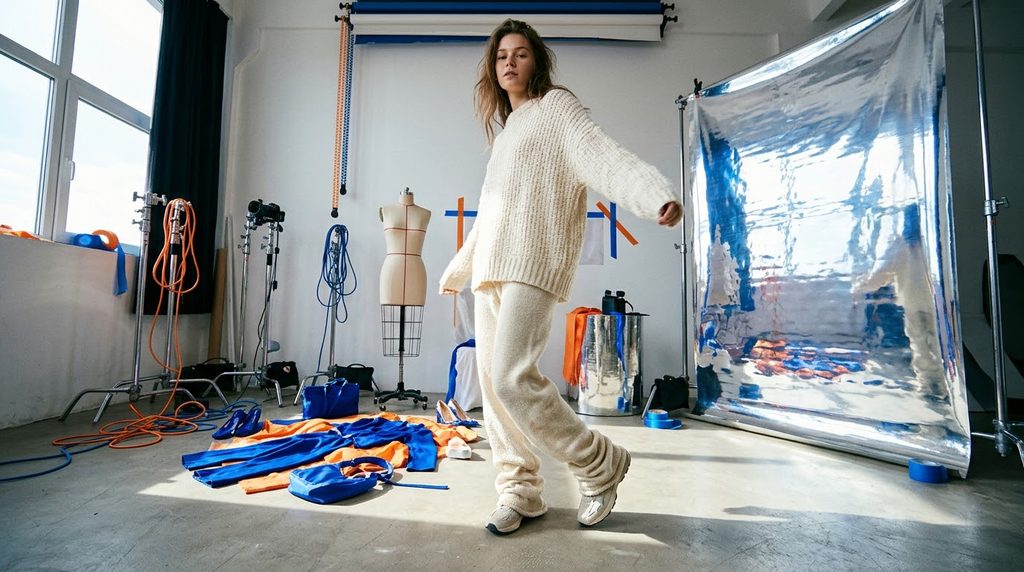
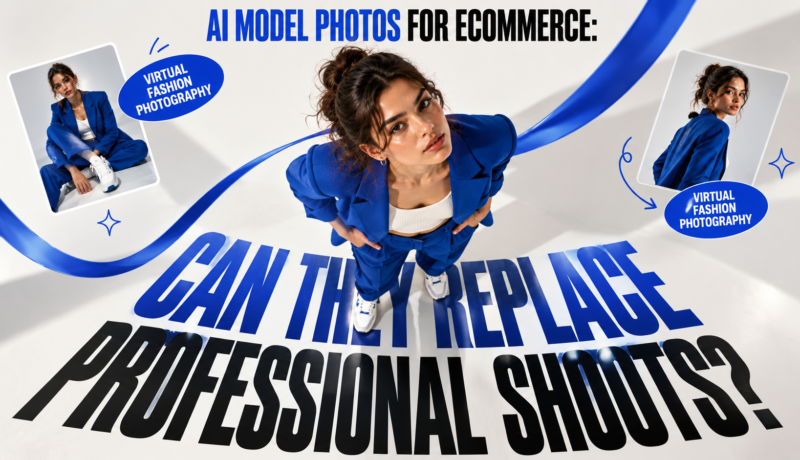
AI-generated model images place a real garment photo—usually a flat lay, hanger shot or ghost mannequin image—onto a synthetic model in a chosen pose, setting or styling direction. You may also see this called virtual fashion photography or AI clothing photography.
The workflow typically combines garment segmentation, pose mapping and generative diffusion. The software isolates the item, interprets its shape, then maps it onto a generated body. Google Research’s TryOnDiffusion paper explores how these systems can retain details such as texture, pattern and garment deformation.
Still, an AI image is not a fit guarantee. It can visualize an outfit convincingly, but it cannot prove how a specific size will stretch, sit or feel across different bodies. That distinction matters on product pages, where visual appeal has to be balanced with product truth.
AI Model Photos for E commerce vs. a Studio Shoot
| Consideration | Traditional ecommerce photography | AI-generated model images |
|---|---|---|
| Typical cost per SKU | Approximately $50–$250+ | Approximately $0.10–$5 |
| Turnaround | Often 2–4 weeks | Minutes to hours |
| Scale and variation | Limited by budget, booking and casting | Many models, poses and backgrounds quickly |
| Fabric and construction detail | High fidelity | Moderate to high, but variable |
| Color accuracy | Controlled with a proper studio process | Can drift without careful review |
| Fit representation | Real garment on a real body | Visual approximation, not proof of fit |
| Brand storytelling | Nuanced, distinctive and art-directed | Effective, but at risk of looking generic |
| Quality control | Photographer, stylist and retoucher-led | Requires rigorous human review |
Traditional e commerce photography involves samples, studio time, models, styling, hair and makeup, retouching and approvals. That investment also captures observable reality. Shopify’s e commerce product photography guide makes the case for clear, consistent imagery as merchandising infrastructure—not simply decoration.
AI changes the economics of derivative content. Once a reliable source image exists, testing a new model profile, pose or backdrop can cost very little.
Where AI Model Photos for E commerce Earn Their Keep
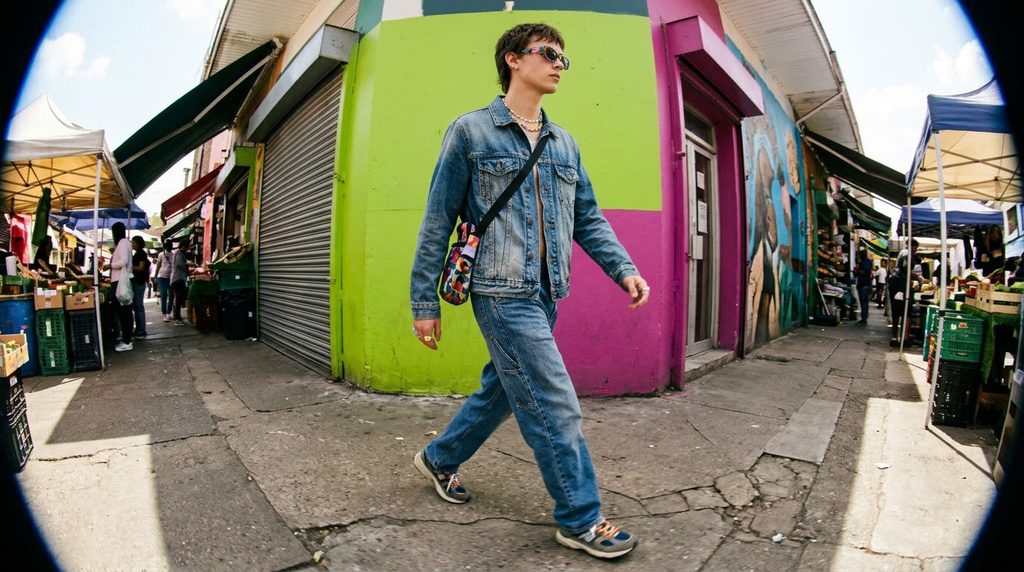
AI works best when the brief is expansive rather than precision-critical. A marketplace seller with hundreds of SKUs can turn consistent ghost mannequin images into fuller catalog content. A Shopify brand can test several backgrounds or model demographics in paid social before funding a larger campaign. A global retailer can localize creative for regional audiences without recasting every shoot.
That is the useful role of AI fashion photography: creating more relevant visual routes from a verified product base, rather than presenting an imagined version of the item as fact.
It can also support early creative development. Fashually’s AI Fashion Photos hoots can help teams explore poses, locations, styling directions and campaign aesthetics before committing to physical production. For content teams, it can extend core assets into seasonal edits, outfit pairings and quick-turn social media content for fashion brands that would be impractical to reshoot every week.
The Details AI Still Gets Wrong
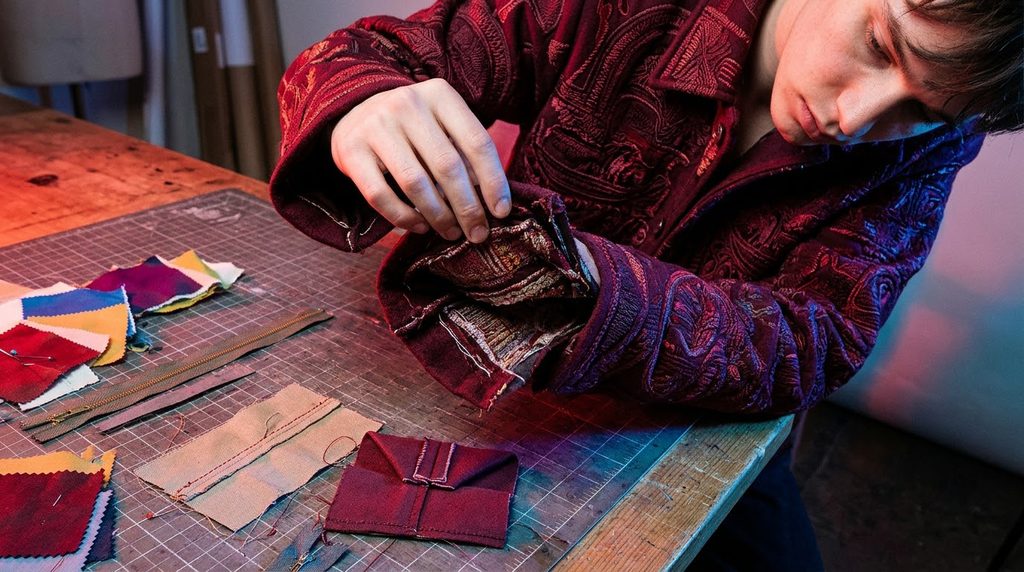
The most polished AI image can still misrepresent a product. Fine ribbing may become smooth. A burgundy knit can shift toward red. A neckline may deepen, a hem may shorten, or a logo, seam line or closure may be softened or moved.
Those risks are lower with simple jersey tees, straightforward denim and broad silhouettes. They become far more consequential with lace, sheer fabrics, sequins, embroidery, jewelry, tailoring and technical outerwear.
Fabric drape is particularly difficult. A photographer captures what a material actually does under light and gravity on a real body. AI predicts what it thinks the garment should do. Those are not the same thing.
Every AI-generated model image should therefore be supported by clear physical product views: a flat lay, back view, close-up texture image or construction detail. Review final assets against the sample or approved swatch, paying close attention to color, logos, trims, prints, edges, closures and shadows.
When a Photographer Is Still the Better Call
A hybrid approach is usually the commercially sensible answer. Use AI for catalog expansion, pose and background testing, regional localization, secondary ad creative, virtual styling and early campaign concepts.
Hire a professional photographer for homepage heroes, flagship launches, premium editorial work, fit-critical imagery, size-reference shots and garments with complex construction or difficult materials. Reflective, transparent, highly textured and luxury products especially benefit from real light, real tactility and intentional direction.
Professional fashion photography is not merely image production. It is a collaboration between photographer, stylist, art director, model and retoucher—people making deliberate choices about casting, movement, lighting and mood. Those choices are still difficult to standardize through prompts alone.
A Hybrid Workflow That Protects Customer Trust
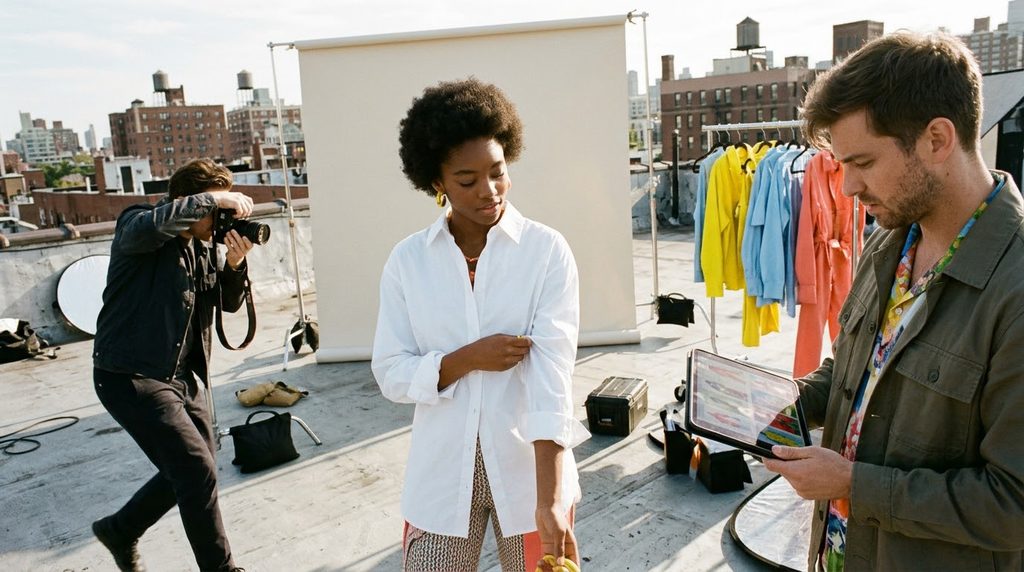
Start with the real garment, not an imagined version of it. Photograph or scan it cleanly on a mannequin, hanger or flat surface, using accurate color management and detail shots. Those physical images become both customer-facing proof and the source material for AI variations.
- Build approved base assets for front, back, detail and texture views.
- Generate AI model variations only from verified product images.
- Set brand rules for framing, lighting, skin finish, poses and backgrounds.
- Review every output against the physical sample or approved swatch.
- Publish AI images alongside factual product photos, measurements and fit notes.
- Monitor conversion, customer questions and e commerce product returns by SKU.
This approach gives marketing and creative teams room to test visual worlds without treating synthetic imagery as a substitute for garment validation. AI can help explore an aesthetic direction; it does not guarantee exact size, fabric feel, comfort or real-world fit.
Final Verdict: A Content Engine, Not a Camera Replacement
AI model photos for e commerce can dramatically reduce production time and unlock content volume that smaller brands may never be able to afford through studio photography alone. They are particularly useful for catalog breadth, creative testing, localization and always-on marketing.
But a beautiful render is not automatically accurate e commerce merchandising. The products best suited to AI have clear source imagery, uncomplicated construction and a genuine need for many visual variations. The products most likely to need a photographer are those where fit, touch, light and craftsmanship are central to the sale.
The strongest strategy combines both: professional photography for truth, trust and brand-defining storytelling; AI model photos for e commerce for speed, experimentation and reach.
Frequently Asked Questions
Can AI model photos replace professional fashion photography?
AI can reduce repetitive production work and create scalable variations, but it is not a full replacement for professional photography where fit, fabric detail, premium presentation or storytelling matter most.
Are AI-generated model images accurate enough for product pages?
They can be useful when based on verified garment images and carefully reviewed. They should be paired with factual product photos, detail views, measurements and fit notes.
Which garments work best with AI fashion photography?
Simple garments with clear silhouettes, such as basic tees, denim and broad shapes, are generally lower risk than lace, tailoring, sheer fabrics, sequins or technical outerwear.
Can AI model photos increase e commerce returns?
They can if the final image misrepresents color, length, texture, transparency or construction. Human quality checks and supporting physical product imagery help reduce that risk.
What is the best workflow for using AI product imagery?
Create accurate base photography first, generate controlled AI variations from those assets, review every output against the physical garment, then track conversion and return patterns by SKU.