
Table Of Content
- AI Virtual Try-On: From Flat Product Shot to Wearable-Looking Image
- Where AI Virtual Try-On Helps—and Where It Still Cannot
- Beyond “Does It Fit?”: Fashion Discovery Gets More Personal
- Fashually’s Role: Explore the Look Before the Checkout
- Why Better Representation Is the Real Test
- What Fashion Shopping Could Look Like Next
- AI Virtual Try-On FAQs
- Is AI virtual try-on accurate for sizing?
- What is the difference between virtual try-on and an AR overlay?
- Can AI virtual try-on help reduce clothing returns?
- Does AI virtual try-on work for different body types?
- How does Fashually use AI virtual try-on?
Few online-shopping disappointments are as specific as opening a parcel you were certain would work—only to find the dress sits differently than it did on the model, the denim feels stiffer than expected, or the “perfect” shirt is simply the wrong proportion. AI virtual try-on is starting to close that expectation-versus-reality gap, turning the static product grid into something more personal, visual, and genuinely useful.
This is not the old virtual fitting room, where a flat garment was awkwardly pasted onto a webcam image. Today’s generative tools can create a more natural-looking approximation of how clothing may appear on different bodies. At the same time, AI-led platforms are making it easier to explore complete aesthetics rather than search for one item at a time.
AI Virtual Try-On: From Flat Product Shot to Wearable-Looking Image
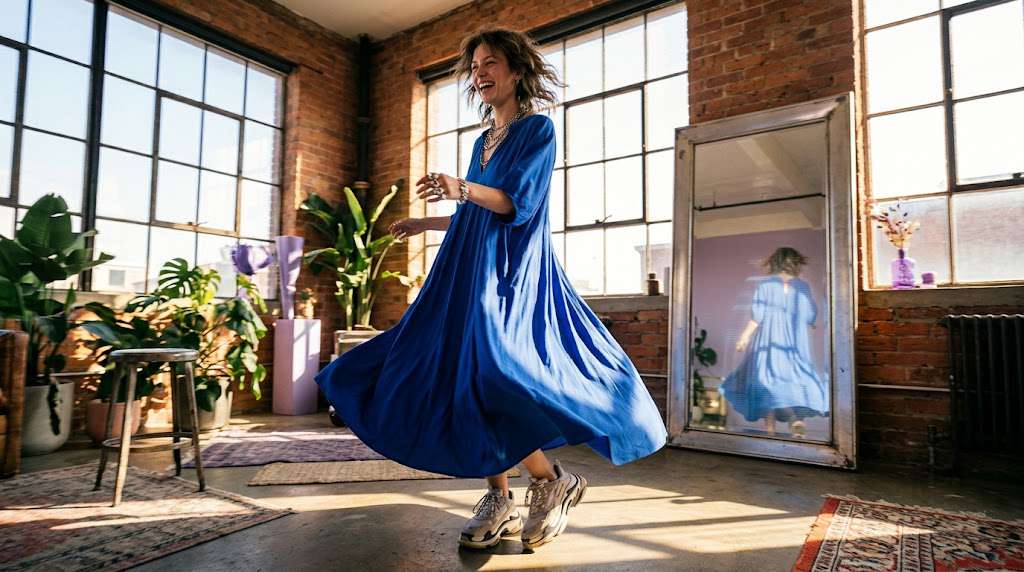
AI virtual try-on uses computer vision and generative AI to visualize a garment on a person, model, or digital representation. Depending on the platform, it may start with a user-uploaded image, a selected model, or an avatar. The system analyzes body position, proportions, pose, and the garment image, then generates a new fashion image that places the item within that scene.
The key word is generates. Earlier virtual fitting room tools often relied on 2D image warping: essentially stretching a product photo over a body. The results could resemble digital paper dolls, with distorted hems, misplaced sleeves, and lighting that did not match the person underneath.
Modern generative systems, including diffusion-model-based tools, aim for more convincing fabric draping, folds, shadows, stretch, and cling. Google’s 2023 virtual try-on launch, for example, described a model that could show apparel on real models ranging from XXS to 4XL while accounting for how garments crease and behave across bodies. As Google explained, that detail helps a flat product image feel more like clothing in motion.
It remains a visual approximation, though—not a guaranteed fit prediction.
Where AI Virtual Try-On Helps—and Where It Still Cannot
Online fashion has always involved a degree of size uncertainty. Shoppers may know their usual size, yet measurements can vary dramatically between brands, categories, and fabrics. That uncertainty often leads to bracket shopping: ordering the same piece in multiple sizes with the expectation of returning most of them.
That habit is expensive for retailers and inefficient for the environment. Every avoidable return can involve more shipping, handling, repackaging, and, in some cases, unsellable inventory. AI virtual try-on will not eliminate returns overnight, but a clearer sense of shape and styling can help shoppers make more considered first choices.
It can be particularly useful for assessing:
- Overall silhouette and proportion
- Whether a shape reads as oversized, fitted, cropped, or elongated
- Colour against different skin tones and styling preferences
- How an item could work with other pieces in an outfit
- The likely visual effect of drape, from a fluid dress to a structured denim jacket
What it cannot reliably tell you, at least not yet, is whether a waistband will feel comfortable after lunch, whether knitwear will itch, or whether a trouser inseam will land at exactly the right point. Product measurements, fabric composition, customer reviews, and real-world judgment still matter. The best shopping technology supports those decisions rather than pretending to replace them.
Beyond “Does It Fit?”: Fashion Discovery Gets More Personal
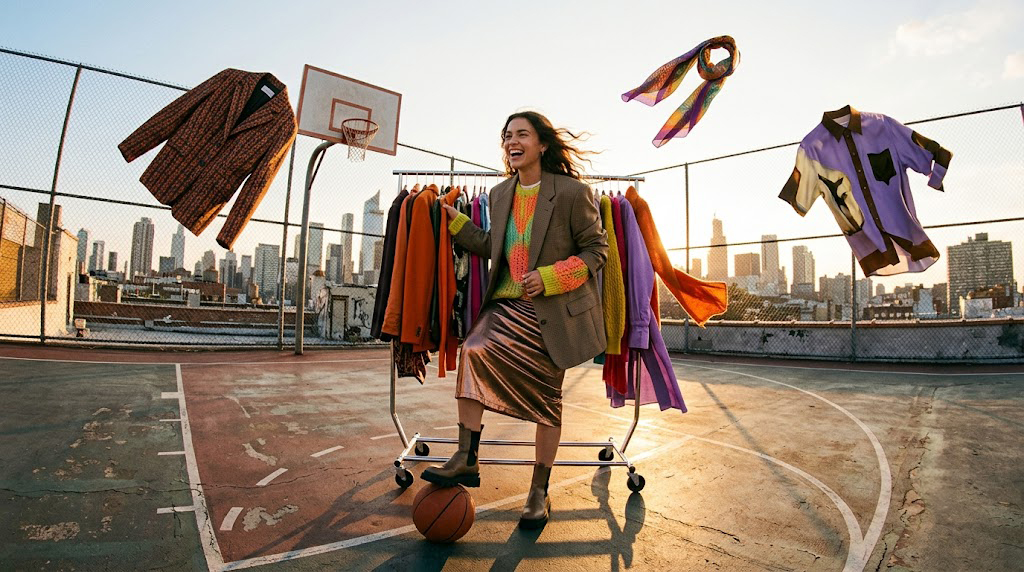
The more interesting shift is not simply seeing a blouse on a different body. It is the move beyond the isolated product.
Traditional e-commerce begins with a search term: “blue midi dress,” “black boots,” “linen trousers.” That works when you know exactly what you need. It is less helpful when you are looking for a feeling instead: a sharper work wardrobe, a holiday capsule, a new approach to tailoring, or an outfit that feels more like you.
This is where discovery-driven commerce comes in. AI can connect individual pieces into a broader visual story, suggesting complementary layers, accessories, colour palettes, and silhouettes. Instead of only asking, “Does this top fit?” shoppers can ask, “Could this belong in my wardrobe?”
The strongest tools do not dictate one “correct” look. They create a low-risk space to test an idea before spending money or committing to a trend. It is the inspiration board becoming interactive, supporting personalized fashion discovery rather than simply serving more products.
Fashually’s Role: Explore the Look Before the Checkout
Retailer-led virtual try-on is usually utility-focused. It helps answer a practical question about a specific item: should I choose this size, colour, or cut?
Fashually sits earlier in the journey, between curiosity and purchase. As an AI-powered fashion visualization platform, it helps users explore outfits, aesthetics, and complete styling concepts visually. Its AI Virtual Try-On capability lets people imagine themselves in different looks, while its fashion visualization tools make it easier to experiment with combinations and creative directions.
That distinction matters. A shopper may not yet be choosing between a medium and a large. They may be working out whether they are drawn to relaxed minimalism, modern bohemian layers, sculptural eveningwear, or a more polished everyday uniform. Through AI-generated outfits, users can explore those directions dynamically and begin to develop their personal style before the checkout page enters the picture.
For creators and brands, Fashually’s AI Fashion Photoshoots workflow extends that visual language into editorial-style imagery, helping bring styling ideas, campaign concepts, poses, and fashion narratives to life. It is inspiration-led technology, not a promise of exact garment specifications.
Why Better Representation Is the Real Test
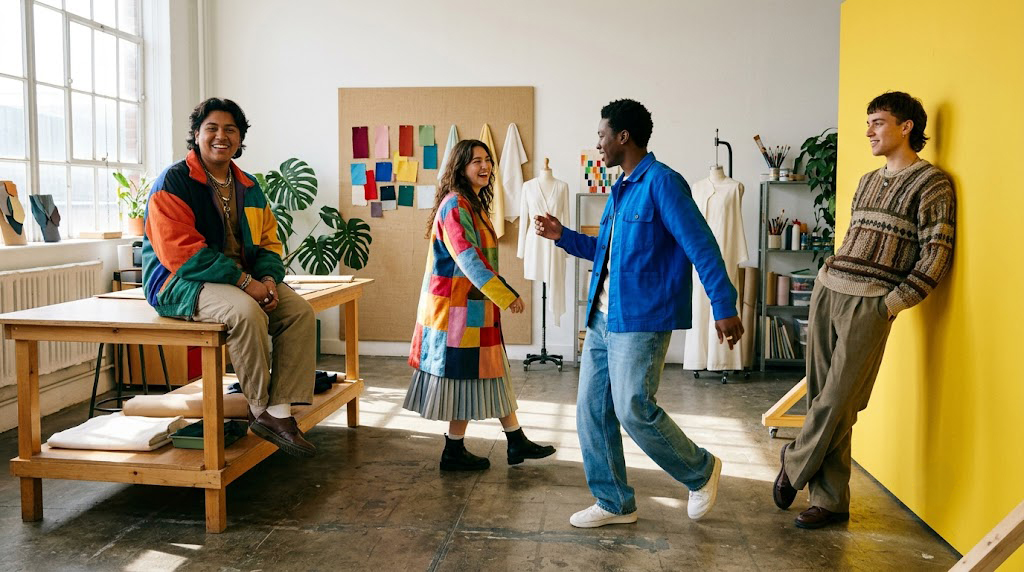
Representation is one of virtual try-on’s most meaningful opportunities. For decades, fashion e-commerce has asked nearly everyone to imagine themselves in clothing shown on one narrow type of model. That is not only limiting; it makes it harder to judge scale, shape, and styling.
Inclusive fashion technology can help shoppers view looks across a broader range of sizes, heights, skin tones, body shapes, and poses. Google made body diversity a visible part of its early generative try-on approach, while newer systems are increasingly designed to feel less one-size-fits-all than the standard catalogue page. TechCrunch’s reporting noted that these generative approaches were intended to avoid the unnatural distortion common in older 2D techniques.
Still, representation requires scrutiny, not blind optimism. AI can misread bodies, flatten distinctive features, generate inaccurate proportions, or reproduce biases embedded in training data. Brands and platforms need to test outputs across diverse people and be clear when imagery is synthetic. A flattering visualization is not enough if it is not faithful to the shopper’s identity.
What Fashion Shopping Could Look Like Next
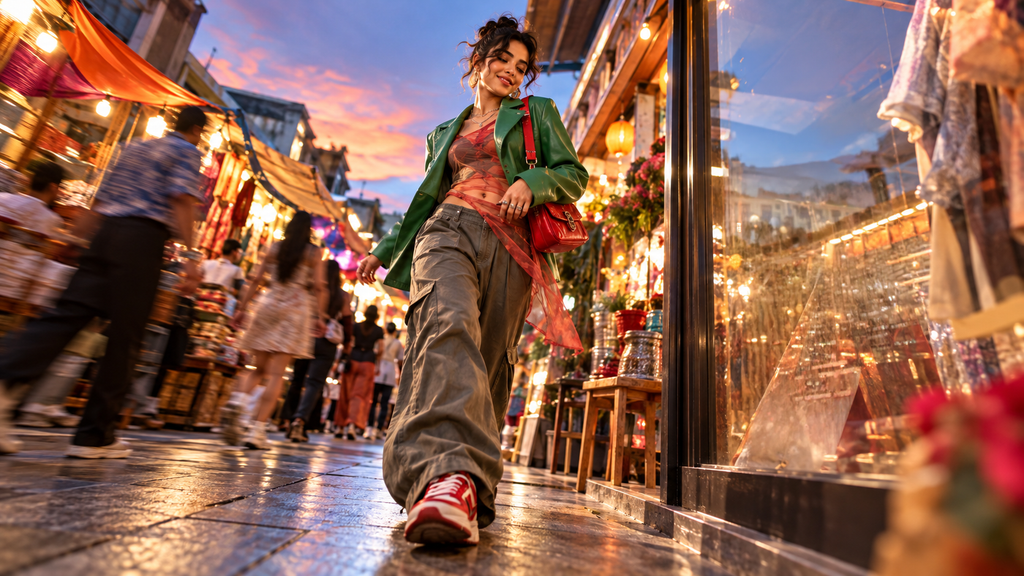
The future is unlikely to be one giant virtual dressing room. More likely, it will be a connected set of useful experiences: smarter product pages, visual search, conversational shopping assistants, and increasingly personal digital wardrobes.
Imagine an AI that suggests an outfit based on the weather, your calendar, pieces you already own, and the mood you want to project. Or a cross-brand try-on space where you pair a jacket from one retailer with trousers from another, then view the full look before buying. That is where garment visualization, virtual styling, and wardrobe planning begin to converge.
There are meaningful commercial reasons for brands to invest in this space. McKinsey estimated that generative AI could add $150 billion to $275 billion in operating profits across apparel, fashion, and luxury, with personalization, curation, and virtual try-on among the key use cases. For shoppers, though, the benefit is more human: less friction, more confidence, and more room for self-expression.
AI virtual try-on cannot replicate touch, weight, workmanship, or the feeling of finding something that fits perfectly in real life. What it can do is make digital fashion shopping less abstract—helping people see more possibilities, make better-informed choices, and treat style as something to explore rather than merely buy.
AI Virtual Try-On FAQs
Is AI virtual try-on accurate for sizing?
It can help you assess silhouette, proportion, and styling, but it does not guarantee physical fit. Always check size charts, garment measurements, fabric details, and customer reviews.
What is the difference between virtual try-on and an AR overlay?
Older AR overlays often place or warp a garment image over a person. Generative AI virtual try-on creates a new image designed to account for pose, lighting, folds, and the way fabric may sit on a body.
Can AI virtual try-on help reduce clothing returns?
It may help shoppers make more confident first choices by improving garment visualization. However, it cannot replace accurate sizing information or reveal comfort, texture, and construction.
Does AI virtual try-on work for different body types?
It can support more representative fashion imagery across sizes, shapes, skin tones, and poses. Results still need careful testing, as AI systems can produce inaccurate proportions or biased outputs.
How does Fashually use AI virtual try-on?
Fashually uses AI-powered visualization to help users explore outfits, aesthetics, and styling concepts. It is designed for fashion discovery and creative exploration rather than exact physical fit prediction.