


Table Of Content
- Skin Tone and Undertone: The Detail That Changes Everything
- Four At-Home Clues to Your Undertone
- Best Clothing Colours for Skin Tone, Without the Rulebook
- Indian Skin Tones Are Not One Colour Palette
- How AI Helps You Find Colours for Skin Tone Before Checkout
- What an AI Outfit Preview Can—and Cannot—Tell You
- Beyond Undertones: Combinations That Always Feel Considered
- FAQs About Colours for Skin Tone and AI Try-Ons
- Can I have more than one undertone?
- Which colours suit neutral undertones best?
- Are AI outfit previews accurate for colour?
- Should I avoid colours that do not match my undertone?
- What is the easiest way to test a colour before buying online?
Shopping for colours for skin tone can feel oddly high-stakes online. That mustard kurta or powder-blue shirt may look flawless on a studio model, then arrive looking flatter—or completely different—against your complexion. It is not always a bad purchase: lighting, retouching, fabric sheen and even your phone screen can shift how a colour reads.
The useful starting point is your undertone. Add AI outfit previews to the mix, and you can test a few directions before buying. Think of it as a faster dressing-room experiment, not a set of fashion rules.
Skin Tone and Undertone: The Detail That Changes Everything
Your skin tone is the surface colour you see at a glance: fair, medium, wheatish, dusky or deep. It can change with tanning, sun exposure and skincare. Your undertone is the subtler cast beneath the surface, and it usually remains more consistent.
- Warm undertones: golden, yellow, peach or olive casts
- Cool undertones: pink, red or bluish casts
- Neutral undertones: a balanced mix without a strong warm or cool pull
Why does this matter? Two people with similarly fair or deep skin can look entirely different in the same beige, pink or green. Indian complexions span the full range of undertones, too. Golden and olive undertones are common, but cool, neutral and cool-olive complexions are just as real.
Four At-Home Clues to Your Undertone
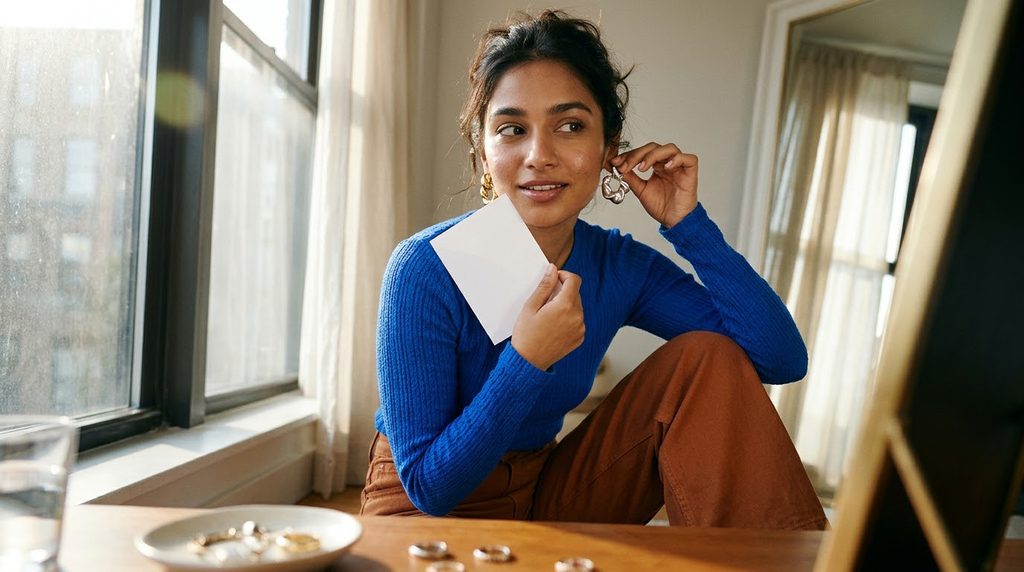
These tests are useful clues, not a diagnosis. Check in natural daylight, ideally without heavy makeup, coloured lighting or a beauty filter.
- Vein test: Blue or purple-looking veins can suggest cool undertones; greener veins may suggest warm or olive undertones. A mix can indicate neutral.
- Jewellery test: If silver makes your skin look clear and fresh, you may lean cool. If yellow gold looks especially harmonious, you may lean warm. If both work, you may be neutral.
- White-paper test: Hold plain white paper beside your face. A golden cast can suggest warmth, while a rosy or pink cast may point to coolness.
- Sun-response test: Skin that tans readily may lean warm or olive, while skin that burns easily can sometimes lean cool. This is the least reliable test, so do not use it alone.
These are styling tools, not hard science. Byrdie’s guide to identifying undertones is a helpful reference, but seeing yourself in several colours matters more than any single test.
Best Clothing Colours for Skin Tone, Without the Rulebook
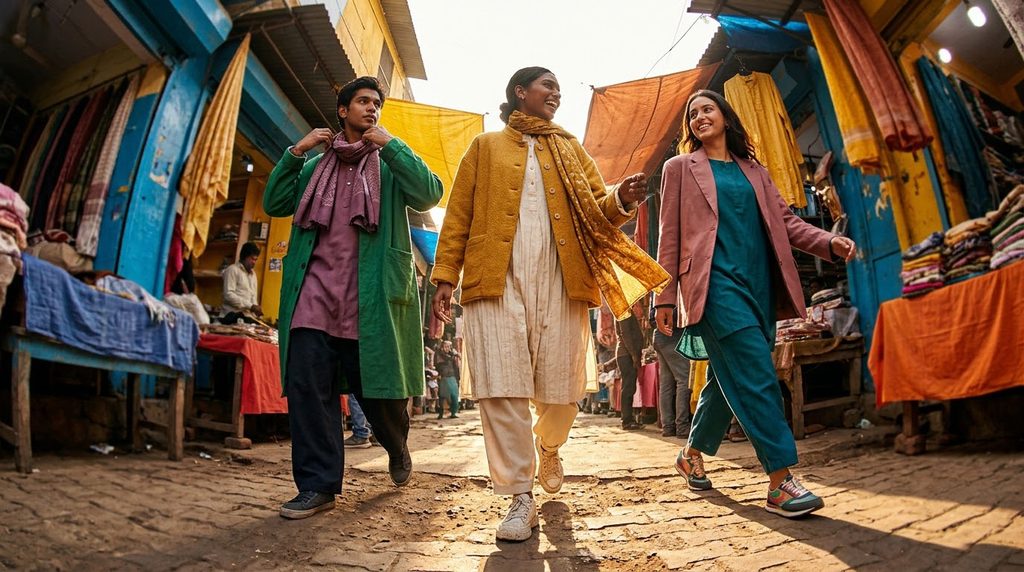
The best clothing colours for skin tone are usually the ones that make your face look rested, clear and alive—not simply the shades you have been told to wear.
Warm undertones often suit earthy, sunlit shades: mustard, terracotta, rust, olive, camel, cream, ecru, warm coral and deep peach. That does not mean icy blue or violet are off-limits; they are simply worth testing near your face first.
Cool undertones can start with jewel and blue-based shades such as royal blue, emerald, plum, magenta, cool mauve, berry, charcoal, navy and crisp white. Yellow-beige, muddy orange and muted mustard may be less flattering close to the face.
Neutral undertones have plenty of flexibility. Teal, dusty rose, jade, medium grey, soft navy, chocolate brown, mauve and softened jewel tones are strong places to begin. Highly saturated neons can sometimes overwhelm the face, but styling and confidence still count.
For more colour-family inspiration, see InStyle’s guide to finding flattering colours.
Indian Skin Tones Are Not One Colour Palette
There is no universal list of clothing colours for Indian skin tones. The phrase covers enormous variation in both depth and undertone. A deep cool complexion may look striking in cobalt and plum; a medium golden complexion may glow in rust and cream; a neutral olive complexion may wear teal and dusty rose equally well.
For festive dressing, consider shades that can hold their own beside embroidery, gold jewellery and richer fabrics: emerald, teal, royal blue, wine, plum, coral, mustard and rust. Then look at intensity. Dusty rose and hot fuchsia are both pink, but they create very different contrast against the face.
If you love a shade outside your suggested palette, change the styling rather than abandoning it. Wear it as a trouser or skirt, add a more flattering scarf or jacket near your face, or use jewellery and makeup to balance the look.
How AI Helps You Find Colours for Skin Tone Before Checkout
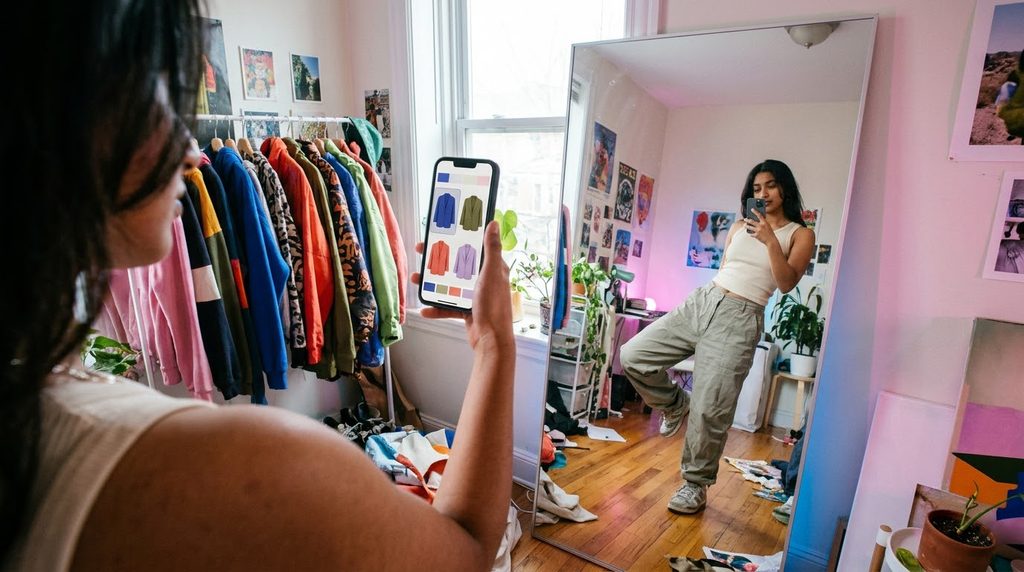
Colour theory gives you a starting point. AI lets you compare the options. An AI fashion colour matching workflow can help you visualise several shades before committing to a purchase.
- Choose a clear photo. Use even daylight, minimal filters and a visible face. Avoid strong yellow bulbs and blue-tinted shade.
- Keep the silhouette consistent. Compare one kurta, blazer, dress or co-ord in different colours rather than changing the garment and shade at once.
- Test three to five shades. Try a reliable option, a nearby alternative and one wild card. If you lean warm, compare olive, rust and cream with cobalt or lilac.
- Compare warm and cool versions. Put coral next to dusty rose, mustard next to lemon, or warm navy next to true royal blue.
- Save what works. Build a reference collection with a digital style board for workwear, weekends and festive events.
Fashually’s Fashion Visualization and AI Virtual Try-On tools can make this experimentation lower-risk, especially when you are deciding between colours you would not normally consider. Generative AI is also increasingly shaping personalised fashion discovery, as McKinsey notes in its overview of generative AI in fashion.
What an AI Outfit Preview Can—and Cannot—Tell You
An AI outfit generator can offer a useful sense of how a colour works with your face, hair contrast and overall aesthetic. It cannot guarantee that the delivered garment will look identical.
- Screen calibration: OLED and LCD screens display colour differently, while blue-light filters and brightness settings can alter a shade further.
- Lighting: Studio images often make fabrics look cleaner and more vivid. Warm indoor lighting can soften cool shades, while office lighting can make them look sharper.
- Fabric finish: Matte cotton, satin, raw silk and velvet reflect light differently. The same emerald dye will not read the same across each fabric.
- Image processing: AI rendering is a visual interpretation, not a physical sample. It cannot confirm sizing, fit, texture, comfort or garment quality.
Use virtual try-on for clothes as a styling aid, then check retailer images, customer reviews, fabric composition and return terms before you buy.
Beyond Undertones: Combinations That Always Feel Considered
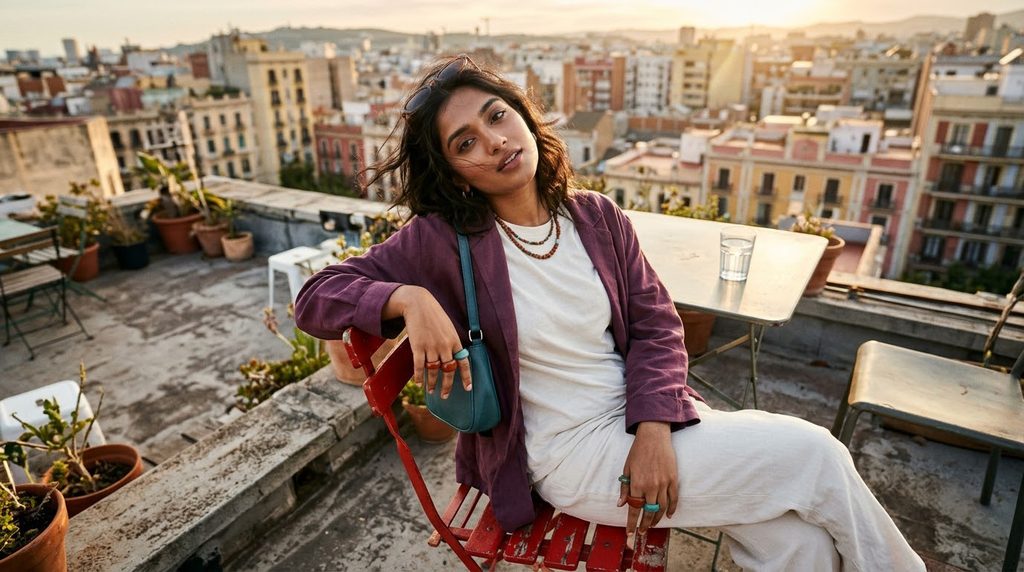
Undertone is only one part of the picture. Contrast, occasion, accessories and personal taste all affect the final result. Soft navy with dusty rose feels quiet and polished; cream with deep plum creates a bolder, graphic contrast.
- Olive + cream: relaxed, warm and polished
- Navy + dusty rose: soft but work-appropriate
- Teal + rust: rich contrast for festive or evening dressing
- Plum + soft white: refined and bright without looking harsh
- Royal blue + camel: clean, modern and versatile
If terracotta is technically less ideal for your cool undertone but makes you feel great, wear it. Try silver jewellery, a cooler lipstick, a navy layer or a soft-white neckline to shift the balance. Great personal style is not about obeying a chart; it is about knowing how to make a look feel like yours.
FAQs About Colours for Skin Tone and AI Try-Ons
Can I have more than one undertone?
You may sit between categories or have olive characteristics that do not fit neatly into warm, cool or neutral labels. Use the categories as starting points, then trust real-life comparisons.
Which colours suit neutral undertones best?
Neutral undertones often work well with teal, soft navy, dusty rose, mauve, jade, chocolate brown and softened jewel tones. The most flattering depth will depend on your natural contrast.
Are AI outfit previews accurate for colour?
They are useful for comparing colour directions and outfit balance, but they cannot reproduce exact fabric dye, lighting, texture or screen variation. Always check product details before purchasing.
Should I avoid colours that do not match my undertone?
No. Wear the colour differently: keep it away from your face, pair it with a flattering layer, or balance it with accessories and makeup that better suit your complexion.
What is the easiest way to test a colour before buying online?
Compare several shades in an AI preview, review customer photos and fabric details, and check the return policy. A colour that looks good in multiple references is usually a safer choice.
The most flattering colours are usually the ones that support your features and make you want to get dressed. Use undertone guidance as your map, AI previews as your dressing room, and leave room for instinct.